


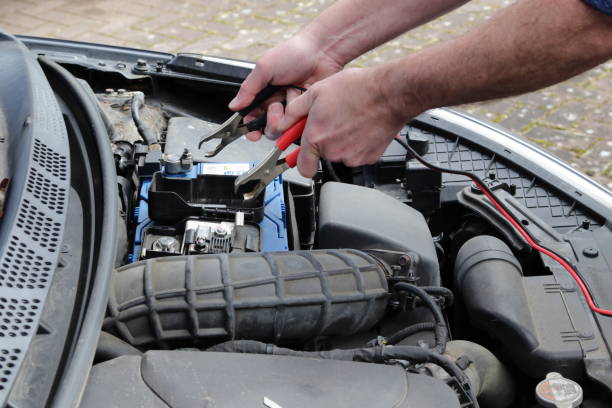
Charging a car battery means restoring electrical energy in a vehicle’s battery using an external charger or the car’s alternator so the car can start and power electrical systems.
In Nigeria, battery issues are very common due to traffic, frequent short trips, heat, and power-heavy vehicle usage (AC, lights, sound systems, etc.).
How a Car Battery Gets Charged
There are two main ways:
1. Alternator Charging (While Driving)
- The engine powers the alternator
- The alternator charges the battery automatically
- Works best during longer driving trips
2. External Battery Charging
- Uses a battery charger connected to electricity
- Common when battery is weak or fully drained
- Often done at home, workshop, or by mobile mechanics
Signs Your Car Battery Needs Charging
- Car refuses to start or cranks slowly
- Dim headlights or dashboard lights
- Clicking sound when turning ignition
- Electrical features working poorly (radio, AC controls)
- Battery warning light on dashboard
How to Charge a Car Battery Safely
Step 1: Turn Off the Car
- Ensure ignition and all electronics are off
Step 2: Remove Battery (Optional)
- Some people charge it while installed
- Removing it is safer for full charging
Step 3: Connect Charger
- Red clamp → positive (+) terminal
- Black clamp → negative (–) terminal
Step 4: Set Charging Level
- Low amperage = slow, safe charging
- High amperage = faster but less gentle
Step 5: Start Charging
- Charge for 4–12 hours depending on battery condition
Step 6: Test Battery
- Check voltage or try starting the car
Jump-Starting vs Charging
| Jump-Start | Charging |
|---|---|
| Uses another car | Uses charger or alternator |
| Instant start | Takes time |
| Temporary solution | Restores battery health |
| Emergency use | Maintenance method |
Causes of Battery Drain in Nigeria
- Leaving lights or AC on
- Short-distance driving only
- Weak alternator
- Old or worn-out battery
- Excessive heat damage
- Poor wiring or electrical faults
How Long a Car Battery Takes to Charge
- Slow charger: 6–12 hours
- Fast charger: 2–6 hours
- Alternator charging: depends on driving time (30–90 minutes minimum driving needed for partial recharge)
Cost of Battery Charging in Nigeria (2026)
- Workshop charging: ₦1,000 – ₦5,000
- Mobile mechanic service: ₦3,000 – ₦10,000
- Battery replacement (if needed): ₦40,000 – ₦150,000+ depending on vehicle
When You Should Replace Instead of Charging
Charging may not help if:
- Battery is over 2–4 years old
- Battery keeps dying repeatedly
- Battery case is swollen or leaking
- It cannot hold charge after full charging
Safety Tips
- Do not smoke near batteries
- Avoid sparks during connection
- Ensure proper polarity connection
- Do not overcharge battery
- Use correct charger for battery type
Battery Charging for Fleet & Logistics Vehicles
For transport and logistics companies, battery charging systems are critical because:
- Vehicles must start reliably every day
- Breakdown causes delivery delays
- Frequent short trips drain batteries faster
- Fleet maintenance reduces downtime
Many fleets now use:
- Scheduled battery testing
- Preventive replacement cycles
- Mobile charging and repair units
Conclusion
Charging a car battery is an essential maintenance and recovery process that keeps vehicles operational. In Nigeria, regular charging and proper battery care are important due to driving conditions, traffic patterns, and high electrical load on vehicles.
