


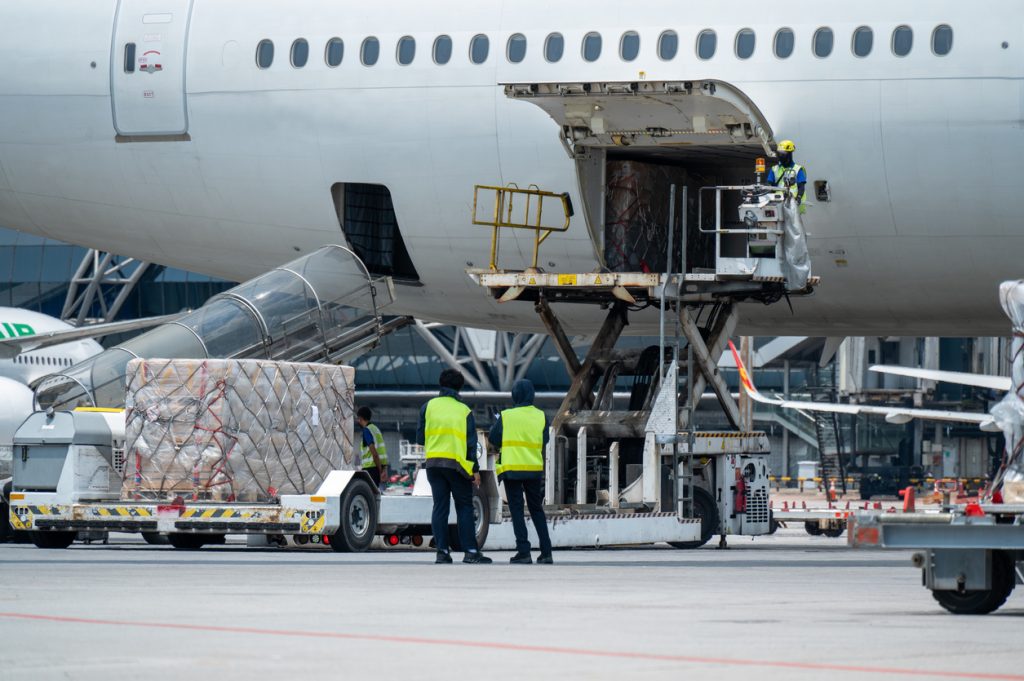
Air freight is one of the fastest ways to move high-value, urgent and time-sensitive goods across Africa, but the speed of the aircraft does not always translate into a fast end-to-end delivery. Cargo can spend significant time waiting for documentation, customs clearance, handling, storage, transportation or onward delivery.
Across African markets, air freight bottlenecks are often caused by several connected problems rather than one issue. Limited cargo infrastructure, fragmented regulations, manual processes, congestion and weak connections between airports and inland transport networks can all increase cargo dwell time and logistics costs. Recent industry discussions in Nigeria have similarly highlighted documentation, cargo processing, access and coordination challenges at Lagos airport. (FedMin Info & Nat Orientation)
Where Air Freight Bottlenecks Usually Start
An air freight shipment passes through several stages before reaching its final destination. A delay at any one stage can affect the entire supply chain.
Common bottlenecks include:
- Slow customs clearance
- Incomplete or incorrect documentation
- Limited cargo-handling equipment
- Congested cargo terminals
- Inadequate warehousing
- Limited cold-chain capacity
- Poor road access to airports
- Multiple regulatory agencies
- Weak digital integration
- Limited regional flight connectivity
- Delays in cargo collection and final delivery
This means improving aircraft capacity alone will not necessarily solve air freight delays.
Customs and Documentation Delays
Customs processing remains one of the most important sources of delay in African air cargo.
Where documentation is still heavily dependent on manual processes or systems used by different agencies do not communicate effectively, freight forwarders and importers may have to provide information repeatedly.
This can be particularly problematic for pharmaceuticals, perishables, electronics, aircraft parts and other shipments where delays have financial or operational consequences.
In Nigeria, recent stakeholder discussions have specifically identified documentation and cargo-processing difficulties among the issues affecting cargo movement at Murtala Muhammed International Airport. (FedMin Info & Nat Orientation)
Limited Cargo Infrastructure
Not every African airport has modern cargo terminals, specialised warehouses or sufficient handling equipment.
A shortage of suitable infrastructure can result in congestion during busy periods and make it more difficult to handle specialised shipments.
Temperature-sensitive cargo requires appropriate cold-chain facilities, while valuable goods may require secure storage and controlled handling. Industry analysis has identified uneven cargo infrastructure and limited temperature-controlled facilities as continuing constraints across African markets. (World Ports Network)
Airport Apron and Handling Constraints
The bottleneck may also occur on the airside.
Limited apron space, aircraft stands, ground-support equipment and handling capacity can affect how quickly cargo aircraft are processed.
When aircraft have to wait for available handling resources, the delay can extend beyond the airport. Late cargo loading or unloading can affect trucking schedules, warehouse operations and onward connections.
For airports experiencing increasing cargo volumes, coordinated resource planning becomes increasingly important.
Poor Road Connections After Landing
An aircraft can arrive on time and the shipment can still reach its destination late.
Once cargo leaves the airport, it may face traffic congestion, poor road conditions, long collection times or limited trucking availability.
This is particularly relevant in cities such as Lagos, Nairobi and other major African commercial centres where airport access roads can experience significant traffic pressure.
Air freight therefore needs to be viewed as part of a wider logistics chain rather than an isolated aviation service. (African Pilot Magazine)
Cold Chain Gaps for Perishable Cargo
Africa has significant agricultural and pharmaceutical air freight opportunities, but temperature-sensitive shipments require reliable infrastructure from origin to destination.
Flowers, fresh produce, seafood, vaccines and medicines may require controlled temperatures during storage, handling and transportation.
A modern cargo terminal cannot fully solve the problem if temperature-controlled facilities are missing at another point in the supply chain.
Improving cold rooms, refrigerated transport, airport handling procedures and first-mile collection can therefore reduce the risk of delays and product losses.
Fragmented Regional Air Freight Networks
Moving cargo between African countries can sometimes require indirect routing through major international hubs.
Limited direct regional connectivity means a shipment travelling between two African markets may pass through additional airports, adding handling stages, transit time and costs.
Industry analysis continues to identify fragmented regional connectivity, uneven customs procedures and limited cargo-handling capacity as obstacles to stronger intra-African air freight networks. (World Ports Network)
Technology and Cargo Visibility
Poor visibility makes bottlenecks harder to identify.
Digital cargo-management systems can help stakeholders track shipment status, documentation, warehouse movements and key processing stages.
Technology can also help identify where cargo is spending too much time. Research on cargo logistics at Murtala Muhammed International Airport found bureaucracy, equipment and facilities, traffic flow and other operational factors to be significant influences on cargo distribution efficiency, with the study highlighting real-time automation as one potential improvement. (ScienceDirect)
The goal should not be technology for its own sake. Digital systems need to connect the people and organisations actually handling the shipment.
How Travo.ng Can Support Air Freight Logistics
Travo.ng is not an airport cargo operator or customs authority, but it can support the wider transportation and logistics activities surrounding air freight.
For businesses moving people or goods through Nigerian airports, relevant support can include delivery coordination, cargo logistics, airport transportation, vehicle hire and other travel or movement arrangements where applicable.
For example, a company receiving urgent goods through Lagos may need transportation coordinated from the airport to a warehouse or business location. Travo.ng can help connect that ground movement with the wider logistics process.
For companies with travelling staff, Travo.ng can also support flight bookings, airport transfers, hotel reservations and local transportation, helping businesses coordinate the travel requirements that often sit alongside their logistics operations.
Reducing Air Freight Bottlenecks in Africa
There is no single solution to Africa’s air freight bottlenecks. Improvements need to happen across several parts of the supply chain.
Practical measures include:
- Digitising customs and cargo documentation
- Improving cargo terminal capacity
- Expanding cold-chain infrastructure
- Increasing access to modern handling equipment
- Connecting airport systems
- Improving road access to cargo terminals
- Coordinating agencies involved in clearance
- Developing stronger regional cargo routes
- Improving shipment tracking and visibility
- Training cargo and logistics personnel
The most effective improvements are likely to come from treating the airport as one part of a larger logistics network.
Making Air Freight Faster Beyond the Airport
Africa’s air freight sector has significant potential for pharmaceuticals, agricultural exports, e-commerce, manufacturing and other time-sensitive trade. But the aircraft is only one part of the journey.
Cargo needs to reach the airport, clear the necessary processes, move through the terminal, be loaded efficiently and continue to its final destination without unnecessary interruptions.
Reducing bottlenecks therefore requires better coordination between airports, airlines, customs, freight forwarders, ground handlers, technology providers and road transport operators. When these parts of the supply chain work together, improvements at the airport can translate into faster and more predictable freight movement across Africa.
