


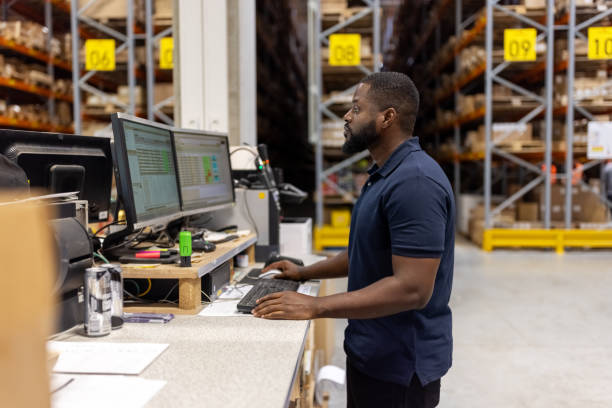
A warehouse logistics tracker in Nigeria is a digital tracking and management system used to monitor the movement of goods inside warehouses and between warehouses and delivery points. It combines inventory tracking, dispatch monitoring, and real-time logistics visibility to help businesses manage stock more efficiently and reduce losses.
In busy commercial and distribution hubs like Lagos, where warehouses serve retail, e-commerce, and import distribution networks, logistics tracking systems are essential for smooth operations.
What a warehouse logistics tracker actually is
A warehouse logistics tracker is a software and GPS-enabled system that monitors goods as they move through storage, picking, packing, dispatch, and delivery stages.
It helps businesses:
- Track inventory movement in real time
- Monitor goods entering and leaving the warehouse
- Improve dispatch accuracy and speed
- Reduce missing or misplaced stock
- Coordinate deliveries with transport fleets
- Maintain accurate stock records
It gives full visibility across warehouse operations.
Why warehouse logistics tracking is important in Nigeria
Warehouses in Nigeria handle large volumes of imported and locally distributed goods.
Common challenges include:
- Inventory mismatches and stock loss
- Delayed dispatch and order fulfillment
- Poor coordination between warehouse and transport teams
- Manual errors in stock recording
- Difficulty tracking goods after dispatch
- Inefficient loading and unloading processes
Tracking systems help eliminate these inefficiencies.
How warehouse logistics tracking systems work
Modern systems combine warehouse management software (WMS), barcode/RFID systems, and transport tracking tools.
A typical setup includes:
- Barcode or RFID scanning for goods
- Warehouse management dashboard
- Real-time inventory updates
- Dispatch tracking linked to delivery vehicles
- GPS tracking for outbound shipments
- Cloud-based reporting systems
This creates a connected inventory and logistics ecosystem.
Key features of warehouse logistics tracking systems
A strong system provides end-to-end visibility of warehouse operations.
Important features include:
- Real-time inventory tracking
- Stock entry and exit monitoring
- Order picking and packing verification
- Dispatch and delivery tracking
- Barcode or RFID scanning integration
- Automated stock reporting
- Shipment status updates
These features improve accuracy and efficiency.
How tracking improves warehouse efficiency
Warehouse logistics trackers help streamline operations.
They enable:
- Faster order processing
- Reduced picking and packing errors
- Better coordination between staff
- Improved stock rotation and management
- Faster dispatch to delivery vehicles
This increases overall productivity.
Inventory accuracy and loss reduction
One of the biggest benefits is improved stock control.
Tracking helps by:
- Preventing misplaced or lost inventory
- Reducing theft or unauthorized removal
- Maintaining accurate stock records
- Improving audit readiness
- Ensuring correct order fulfillment
This protects business revenue and inventory integrity.
How warehouse tracking improves delivery operations
Warehouse systems are closely linked to transportation.
Tracking helps companies:
- Assign dispatches efficiently to vehicles
- Reduce loading and unloading delays
- Improve delivery scheduling
- Track goods from warehouse to destination
- Provide accurate ETAs to customers
This strengthens the entire supply chain.
Common problems solved by warehouse logistics trackers
Without tracking systems, warehouses often face:
- Missing or incorrect inventory records
- Slow order fulfillment
- Poor coordination with logistics teams
- High operational inefficiency
- Lack of visibility on dispatched goods
Tracking systems solve these issues through automation and real-time data.
Warehouse logistics in Lagos supply chain operations
In a high-demand distribution hub like Lagos, warehouses play a critical role in import distribution, retail supply, and e-commerce fulfillment.
Tracking systems help:
- Manage high-volume goods movement
- Improve coordination with transport fleets
- Reduce congestion-related delays
- Increase speed of order fulfillment
- Maintain accurate supply chain visibility
Common mistakes warehouse operators make
Some warehouses fail to maximize tracking systems.
Common mistakes include:
- Relying on manual stock recording
- Not integrating warehouse and transport systems
- Poor scanning discipline (barcode/RFID)
- Ignoring system-generated reports
- Lack of staff training on logistics tools
Proper implementation is essential for effectiveness.
Integration with logistics systems
Warehouse logistics trackers can integrate with:
- Fleet management systems
- E-commerce platforms
- Order management systems
- Supply chain analytics dashboards
- GPS vehicle tracking systems
This creates a fully connected logistics network from storage to delivery.
How Travo.ng supports warehouse logistics tracking
Modern warehouse operations require both digital tracking and logistics coordination.
Travo.ng supports businesses through:
- Real-time logistics and shipment tracking systems
- Warehouse-to-delivery coordination tools
- Fleet and distribution visibility solutions
- Route optimization and dispatch support
- Supply chain management solutions across Nigeria
This helps businesses improve accuracy, efficiency, and delivery performance.
Final thoughts
A warehouse logistics tracker in Nigeria is essential for modern supply chain management. It improves inventory accuracy, speeds up dispatch operations, reduces losses, and ensures smooth coordination between warehouses and delivery fleets.
In busy logistics hubs like Lagos, tracking systems help businesses maintain control over high-volume operations and deliver goods more efficiently.
