


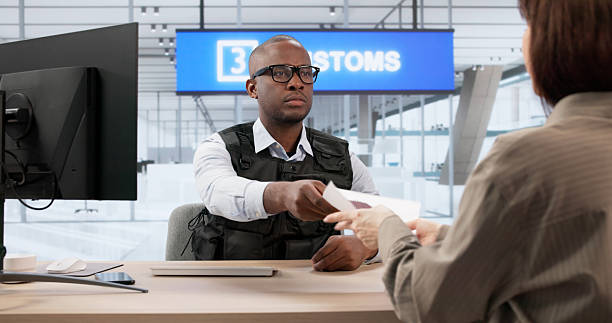
When people search for Nigeria customs broker services, they are usually trying to solve a practical problem — cargo stuck at Apapa or Tin Can Island, unclear duty charges, or confusion about how to legally clear goods through the systems of the Nigeria Customs Service.
A customs broker (also called a clearing agent) is the person or company that handles the entire import clearance process on your behalf — from documentation to duty payment to final cargo release.
In Nigeria’s import environment, a good broker is often the difference between a smooth clearance and days of delay and demurrage.
What a customs broker actually does in Nigeria
A licensed customs broker does far more than “submit papers.” They manage the entire compliance and clearance process at the port.
Their core responsibilities include:
- Preparing and submitting import declarations (SGD filing)
- Processing Form M and Pre-Arrival Assessment Report (PAAR)
- Classifying goods using correct HS codes
- Calculating duties and taxes
- Coordinating with Customs officers during inspection
- Handling valuation queries or adjustments
- Securing cargo release from terminals
- Liaising with shipping lines and port operators
In practice, they act as the link between importers and the entire port system.
Why you need a licensed customs broker in Nigeria
In Nigeria, you cannot legally clear commercial goods without a licensed agent registered with Customs.
But beyond legal requirements, brokers are important because:
- Customs procedures are highly technical
- Documentation rules change frequently
- Valuation systems are strict and benchmark-based
- Port operations in Lagos are congested and time-sensitive
- Small mistakes can lead to inspection or penalties
Without an experienced broker, even simple shipments can face delays.
How customs brokers reduce delays at Apapa and Tin Can ports
At busy ports like Apapa and Tin Can Island, delays are usually caused by:
- Incorrect documentation
- HS code errors
- Valuation disputes
- Late filing of declarations
- Poor coordination with terminals
A good customs broker prevents these issues by:
- Reviewing documents before cargo arrival
- Filing entries early in the system
- Ensuring correct classification and valuation
- Coordinating inspection and clearance schedules
- Managing communication with Customs officers
This reduces the chances of cargo being moved to red-channel inspection unnecessarily.
Customs broker vs freight forwarder: what’s the difference?
Many importers confuse these two roles.
- Customs broker: Focuses on clearance, documentation, and Customs compliance
- Freight forwarder: Focuses on shipping, transport, and logistics movement
Some companies offer both services together, while others specialize in only one area.
For smooth imports, many businesses prefer an integrated service that handles both shipping and clearance to avoid miscommunication between providers.
Common mistakes importers make without a good customs broker
Importers often face delays or extra costs because of:
- Using unlicensed or inexperienced agents
- Inconsistent supplier documentation
- Incorrect HS code classification
- Late submission of Form M or PAAR
- Poor valuation declarations
- Lack of pre-arrival planning
These mistakes often lead to demurrage, inspection delays, and higher import costs.
How customs brokers improve cost efficiency
A skilled broker doesn’t just speed up clearance — they also help reduce import costs by:
- Preventing unnecessary revaluation by Customs
- Avoiding penalty charges from documentation errors
- Reducing demurrage through faster clearance
- Ensuring correct duty classification from the start
- Planning clearance timelines more accurately
In many cases, their expertise saves more money than their service fee costs.
The role of risk management in customs brokerage
Modern customs clearance in Nigeria is driven by risk profiling.
The system evaluates:
- Importer history
- Product category
- Document consistency
- Declared value accuracy
A good customs broker understands how to keep shipments within low-risk profiles by ensuring consistency and accuracy across all import documentation.
This reduces inspection frequency and speeds up clearance over time.
How Travo.ng supports customs clearance and logistics coordination
For importers and businesses dealing with frequent shipments, Travo.ng provides logistics coordination that supports smoother customs clearance processes.
This includes:
- Coordinated import logistics planning before cargo arrival
- Documentation alignment to reduce clearance errors
- Port pickup and cargo evacuation coordination
- Delivery and haulage support after release
- End-to-end logistics management for business imports
By improving coordination between shipping, documentation, and transport, Travo.ng helps importers reduce delays that typically arise during customs clearance.
