


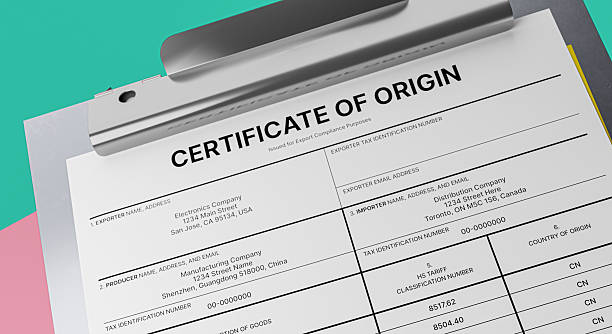
If you import goods through Apapa Wharf, Tin Can Island, or Murtala Muhammed Airport cargo terminal, one of the most important—but often misunderstood—requirements is origin compliance in Nigeria.
It is the foundation behind whether your shipment qualifies for reduced duties, ECOWAS benefits, or faces full import charges after customs verification.
In practice, many import delays, duty increases, and clearance disputes start because origin compliance was not properly followed before shipment arrived.
In simple terms, origin compliance means proving that your goods meet the required rules of origin under Nigerian customs and regional trade regulations.
What Origin Compliance Means in Nigeria Import System
Origin compliance refers to meeting all requirements that prove where goods were manufactured and whether they qualify for preferential treatment.
It is enforced during clearance by:
Nigeria Customs Service
It is used to:
- Confirm true manufacturing origin of goods
- Determine eligibility for preferential duty schemes
- Prevent misdeclaration of imported goods
- Apply correct tariff classification and duty rates
If origin compliance fails, goods are treated as standard imports.
What Origin Compliance Actually Involves
Origin compliance is not just one document. It is a combination of proof and consistency across all import records.
It includes:
- Certificate of Origin validation
- HS code consistency
- Invoice and packing list alignment
- Manufacturing origin proof
- Supply chain route verification
All documents must tell the same story about where the goods came from.
Common Causes of Origin Compliance Issues in Nigeria
Origin compliance problems are common due to global sourcing complexity and documentation gaps.
1. Incorrect Country of Origin Declaration
Goods assembled in one country but declared as another.
2. Weak or Invalid Certificates
Poorly issued or unverified certificates of origin.
3. Transshipment Through Multiple Countries
Goods passing through non-qualifying countries before arriving in Nigeria.
4. Document Inconsistencies
Differences between invoice, packing list, and shipping documents.
5. Misunderstanding Trade Rules
Importers assuming eligibility without proper verification.
What Happens When Origin Compliance Fails at Customs
At Apapa or Tin Can Island, origin compliance failure immediately affects clearance flow.
A typical sequence looks like:
- Cargo arrives at port or airport terminal
- Customs reviews import documentation
- Origin details are flagged for verification
- Preferential duty is denied or suspended
- Goods are reclassified under standard import duty
At this point, clearance continues but often at higher cost and longer processing time.
For importers supplying Alaba International Market, Ladipo Auto Parts, Ikeja electronics hubs, or Abuja distribution networks, this often results in unexpected pricing changes.
Why Origin Compliance Is Strictly Enforced in Nigeria
Origin compliance is taken seriously because:
- It directly affects import duty revenue
- Misdeclaration of origin is a common trade risk
- Global supply chains involve complex production routes
- Trade agreements require strict eligibility verification
Even small inconsistencies can trigger full document review.
The Real Impact of Origin Compliance Problems
When origin compliance fails or is questioned, importers often experience:
- Loss of preferential duty benefits
- Higher-than-expected import charges
- Clearance delays at port terminals
- Increased storage and demurrage fees
- Cash flow pressure due to blocked goods
At busy ports, delays quickly increase total landed cost.
Why Small Origin Errors Become Expensive
Even minor compliance issues can escalate because:
- Duty discounts are immediately removed
- Cargo remains in storage during verification
- Additional documentation may be required
- Shipping timelines are disrupted
So a small inconsistency can significantly increase import costs.
Products Commonly Affected by Origin Compliance Issues
Some imports are more likely to face compliance scrutiny:
- Electronics and mobile devices
- Automotive spare parts
- Textiles and garments
- Processed food products
- Industrial machinery
- Mixed commercial cargo
These categories often involve multi-country production chains.
Where Importers Struggle Most With Origin Compliance
Even after shipment arrives, issues continue due to:
- Customs verification delays
- Supplier documentation inconsistencies
- Difficulty proving manufacturing origin
- Lack of proper certification
- Communication gaps between importer and agent
Processing time varies depending on complexity.
How Origin Compliance Affects Logistics Planning
Origin compliance issues don’t stop at documentation—they affect the entire supply chain.
They can disrupt:
- Cargo release schedules
- Inland transportation planning
- Warehouse stock management
- Retail distribution timelines
A single compliance issue can affect multiple cities across Nigeria.
How Importers Improve Origin Compliance
Experienced importers reduce risk by:
- Verifying origin before shipment
- Ensuring all documents match exactly
- Using proper Certificates of Origin
- Avoiding unclear sourcing routes
- Working with experienced clearing professionals
Most compliance issues are preventable with early preparation.
How Travo.ng Supports Importers After Clearance Delays
While origin compliance affects customs clearance and duty decisions, logistics becomes critical once goods are released.
This is where Travo.ng supports importers and businesses across Nigeria.
Travo.ng helps manage:
- Cargo pickup after customs clearance
- Airport and port delivery coordination
- Nationwide parcel and freight movement
- Interstate logistics for business cargo
- Reliable delivery from terminal to destination
So even when origin compliance issues delay clearance, Travo.ng ensures goods move quickly once released.
Final Insight
Origin compliance in Nigeria is the backbone of smooth customs clearance and correct duty application. When origin documents, classification, and supply chain details are consistent, importers enjoy faster clearance, lower costs, and fewer disputes. Most import challenges at Nigerian ports can be traced back to compliance gaps before shipment arrival.
