


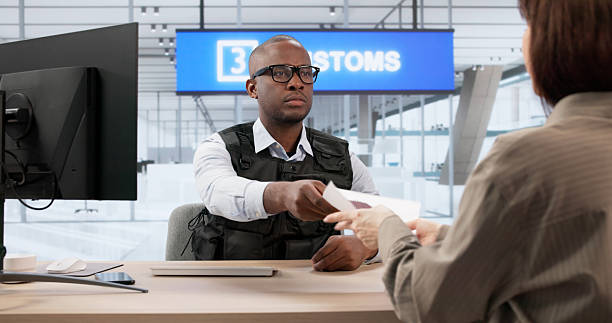
If you import goods through Apapa Wharf, Tin Can Island, or Murtala Muhammed Airport cargo terminal, one process that can quietly hold your shipment for days is customs origin verification in Nigeria.
It often happens when your cargo has already arrived, documents are submitted, and clearance seems normal—but customs decides to confirm where the goods were actually manufactured before allowing duty assessment or release.
In simple terms, customs origin verification is the process of checking and confirming the true country where imported goods were produced, not just what is written on the documents.
What Customs Origin Verification Means in Nigeria
Customs origin verification is the process used to confirm the true manufacturing origin of imported goods before final clearance decisions are made. It is handled by:
Nigeria Customs Service
The goal is to ensure:
- The declared country of origin is accurate
- Correct duty rates are applied
- Trade rules and agreements are respected
- No misdeclaration or false origin claims exist
If anything looks inconsistent, customs may request verification before proceeding.
Why Customs Needs to Verify Origin
Origin verification is not random—it is triggered by risk or inconsistency signals such as:
- Conflicting information in import documents
- Suspiciously low duty declarations
- Goods routed through multiple countries
- Incomplete or unclear Certificate of Origin
- High-risk product categories
When these signals appear, customs pauses clearance to investigate.
What Happens During Customs Origin Verification
At Apapa or Tin Can Island, verification affects clearance flow immediately.
A typical process looks like:
- Cargo arrives at port or airport terminal
- Import documents are reviewed
- Origin details are flagged for verification
- Customs requests supporting proof
- Clearance is paused until confirmation is completed
At this stage, cargo cannot proceed to duty assessment or release.
For importers supplying Alaba International Market, Ladipo Auto Parts, Ikeja electronics hubs, or Abuja distributors, this often means delays in stock availability.
Common Causes of Origin Verification in Nigeria
Origin verification is common due to global trade complexity.
1. Multi-Country Manufacturing
Products assembled in different countries using global components.
2. Inconsistent Documentation
Differences between invoice, packing list, and certificate of origin.
3. Transshipment Through Third Countries
Goods routed through other countries before arriving in Nigeria.
4. Weak or Missing Certificates
Incomplete or questionable origin certification.
5. Risk-Based Customs Profiling
Customs uses risk systems to flag certain shipments for review.
The Real Impact of Customs Origin Verification
Origin verification is not just a check—it affects time and money.
Importers often experience:
- Cargo delays before clearance continues
- Storage and demurrage charges at ports
- Possible increase in import duties after review
- Cash flow pressure due to delayed goods
- Disruption in supply chain timelines
At busy ports like Apapa, delays quickly increase total landed cost.
Why Small Origin Issues Become Major Delays
Even minor inconsistencies can lead to long verification cycles because:
- Customs may request additional documentation
- Suppliers may take time to respond
- Certification authorities may need confirmation
- Internal review processes take time
So a small doubt about origin can turn into days or weeks of delay.
Products Commonly Subject to Origin Verification
Some imports are more likely to be checked:
- Electronics and mobile devices
- Automotive spare parts
- Industrial machinery
- Textiles and garments
- Food and packaged goods
- Mixed container shipments
These categories often involve multi-country production chains.
Where Importers Struggle Most During Verification
Even after verification starts, delays continue due to:
- Slow supplier response to document requests
- Certificate authentication issues
- Communication gaps between importer and agent
- Customs backlogs
- Multiple levels of approval required
In Nigerian ports, timelines are rarely fixed.
How Origin Verification Affects Logistics Planning
Origin verification does not stay at documentation level—it affects the entire supply chain.
It can disrupt:
- Cargo release schedules
- Trucking and inland transport planning
- Warehouse inventory management
- Retail distribution timelines
A single verification process can delay operations across multiple Nigerian cities.
How Importers Reduce Origin Verification Risks
Experienced importers reduce risk by:
- Ensuring accurate origin details before shipment
- Using verified Certificates of Origin
- Avoiding unclear product sourcing descriptions
- Matching all documents consistently
- Working with experienced clearing professionals
Most verification delays can be avoided with proper preparation.
How Travo.ng Supports Importers After Clearance Delays
While customs origin verification affects clearance timing, logistics becomes critical once goods are released.
This is where Travo.ng supports importers and businesses across Nigeria.
Travo.ng helps manage:
- Cargo pickup after customs clearance
- Airport and port delivery coordination
- Nationwide parcel and freight movement
- Interstate logistics for business cargo
- End-to-end delivery from terminal to destination
So even when origin verification delays clearance, Travo.ng ensures goods move quickly once approval is completed.
Final Insight
Customs origin verification in Nigeria is a safeguard process used to confirm the true source of imported goods. It usually happens due to documentation inconsistencies, multi-country production, or risk-based checks. Importers who ensure accurate and consistent documentation from the start experience fewer delays and smoother clearance outcomes.
