


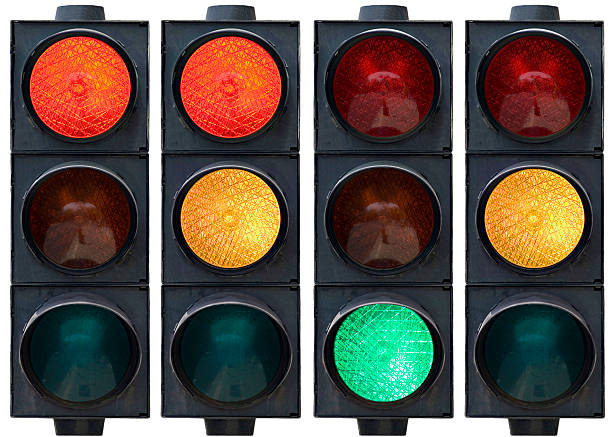
A traffic light sequence is the order in which traffic signals change colors to control the movement of vehicles and pedestrians at road junctions. It is designed to prevent accidents, reduce congestion, and ensure smooth traffic flow.
In Nigeria, traffic lights are managed mainly by state traffic agencies and sometimes FRSC in coordination with urban traffic control systems.
Standard Traffic Light Sequence
The universal traffic light sequence is:
1. Green Light
- Meaning: Go
- Vehicles can move if the road is clear
- Drivers must still watch for pedestrians and other vehicles
2. Amber (Yellow) Light
- Meaning: Prepare to stop
- Signals that the light is about to turn red
- Drivers should slow down safely
- Do not speed up to beat the light
3. Red Light
- Meaning: Stop
- Vehicles must completely stop behind the line
- No movement is allowed unless otherwise directed
Full Cycle of Traffic Light Sequence
The complete order is:
Green → Amber → Red → Green (repeats continuously)
Pedestrian Signal Sequence
In many traffic systems, pedestrians also follow signals:
- Green walking symbol: Cross safely
- Red standing symbol: Do not cross
Some intersections also include a countdown timer.
Advanced Traffic Light Features
Modern traffic systems may include:
1. Countdown Timers
- Shows time remaining before light changes
2. Sensor-Based Signals
- Adjust timing based on traffic volume
3. Smart Traffic Systems
- Uses AI and cameras to manage congestion
4. Dedicated Turn Signals
- Separate arrows for turning left or right
Why Traffic Light Sequence Is Important
1. Prevents Accidents
Controls conflicting vehicle movements.
2. Improves Traffic Flow
Reduces unnecessary delays.
3. Protects Pedestrians
Gives safe crossing intervals.
4. Reduces Road Chaos
Organizes junction movement.
Common Traffic Light Violations in Nigeria
- Jumping red light
- Ignoring amber warning
- Blocking intersection
- Driving during pedestrian crossing phase
These violations can lead to:
- Fines
- Vehicle impoundment
- Traffic penalties under state laws
Traffic Light Sequence in Busy Cities Like Lagos & Abuja
In high-traffic areas:
- Green time is shorter during peak hours
- Red light duration increases to control congestion
- Traffic officers may override signals manually
Simple Memory Trick
To remember the sequence:
Green = Go
Amber = Alert
Red = Stop
Importance for Drivers & Logistics Operators
For transport and logistics vehicles, understanding traffic light sequences helps:
- Avoid fines and delays
- Improve delivery timing
- Reduce fuel waste in traffic
- Maintain safe driving habits
- Prevent accidents in busy urban areas
Conclusion
The traffic light sequence is a simple but essential road safety system that controls movement at intersections. In Nigeria, obeying traffic lights is critical for safety, efficiency, and smooth transportation—especially in busy cities with heavy vehicle flow.
