


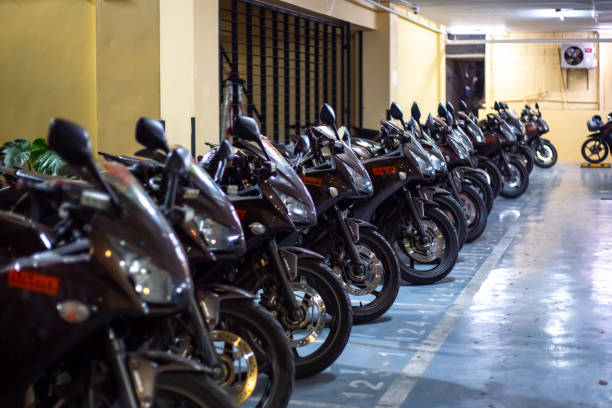
Return on investment (ROI) in motorcycle fleets refers to the financial performance metric used to measure how much profit a motorcycle fleet generates compared to the total cost of acquiring and operating it. It is a key indicator for investors, fleet operators, and logistics companies to determine whether motorcycle-based delivery operations are financially viable and scalable.
Motorcycle fleets are commonly used in courier services, e-commerce delivery, food delivery, pharmacy logistics, and last-mile urban transport, where high utilization and fast delivery cycles can generate strong returns.
What ROI in motorcycle fleets means
ROI in motorcycle fleet operations evaluates the relationship between total investment and net profit over a specific period.
It considers:
- Cost of purchasing motorcycles
- Fuel and energy expenses
- Rider salaries or incentives
- Maintenance and repairs
- Insurance and licensing
- Operational and logistics costs
- Revenue generated from deliveries
In simple terms, it answers: “How much profit does each motorcycle generate compared to what it costs to run it?”
Why ROI is important in motorcycle fleet operations
ROI determines whether a fleet is sustainable and scalable.
Without proper ROI tracking, businesses may face:
- Hidden operational losses
- Overestimated profitability
- Poor asset utilization
- Uncontrolled fuel and maintenance costs
- Inefficient expansion decisions
A clear ROI framework ensures data-driven investment and operational decisions.
Key components that affect motorcycle fleet ROI
1. Asset acquisition cost
The initial investment strongly influences ROI.
This includes:
- Purchase price of motorcycles
- Financing or lease costs
- Registration and insurance
- Initial setup and deployment costs
2. Revenue generation
Revenue depends on how effectively bikes are deployed.
This includes:
- Delivery fees per trip
- Daily order volume per rider
- Contracted logistics services
- Peak demand utilization
- Incentive-based earnings models
3. Operational costs
Recurring costs directly impact profitability.
This includes:
- Fuel consumption
- Rider wages or commissions
- Maintenance and repairs
- Spare parts replacement
- Insurance renewals
- Administrative costs
4. Fleet utilization rate
Higher utilization improves ROI significantly.
This includes:
- Number of trips per bike per day
- Idle time reduction
- Efficient dispatching
- Demand-based deployment
- Zone optimization
5. Maintenance efficiency
Poor maintenance reduces ROI.
This includes:
- Preventive servicing schedules
- Breakdown frequency reduction
- Repair cost control
- Asset lifespan extension
- Downtime minimization
6. Fuel efficiency
Fuel is a major cost driver.
This includes:
- Fuel consumption per kilometer
- Engine efficiency monitoring
- Rider behavior optimization
- Route efficiency improvements
- Cost-per-delivery control
How ROI is calculated in motorcycle fleets
A simple formula:
ROI = (Net Profit ÷ Total Investment) × 100
Where:
- Net Profit = Total Revenue − Total Operating Costs
- Total Investment = Purchase cost + Setup + Operational capital
Example of motorcycle fleet ROI
If a fleet generates:
- Monthly revenue: $10,000
- Monthly operating cost: $6,000
- Net profit: $4,000
And total investment is $20,000:
ROI = (4,000 ÷ 20,000) × 100 = 20% monthly ROI
(Actual results vary depending on region, demand, and efficiency.)
Key performance indicators (KPIs) for ROI tracking
Motorcycle fleet ROI is measured using:
- Net profit per bike
- Cost per delivery
- Revenue per kilometer
- Fleet utilization rate
- Fuel efficiency ratio
- Maintenance cost ratio
- Break-even period
- Asset lifespan value
Benefits of strong ROI in motorcycle fleets
High profitability potential
Well-managed fleets can generate consistent income.
Fast capital recovery
Investors can recover investment within a short period.
Scalable business model
Profitable fleets can expand quickly.
Predictable income streams
Structured logistics contracts improve stability.
Efficient asset utilization
Bikes remain consistently active in operations.
Challenges affecting motorcycle fleet ROI
Despite potential returns, ROI can be affected by:
- Fuel price volatility
- Traffic congestion in urban areas
- Rider inefficiency or turnover
- High maintenance frequency
- Poor dispatch systems
- Seasonal demand fluctuations
Risks of poor ROI management
Without proper systems, fleets may experience:
- Negative cash flow
- Low asset utilization
- High maintenance costs
- Unstable revenue streams
- Slow investment recovery
- Business failure in extreme cases
Technology used to improve ROI in motorcycle fleets
Modern systems improve ROI using:
- GPS tracking and telematics
- AI-based dispatch systems
- Route optimization tools
- Fleet management software
- Fuel monitoring systems
- Predictive maintenance analytics
- Real-time performance dashboards
These tools improve efficiency and reduce waste.
Where logistics coordination fits into ROI improvement
ROI is strongly influenced by how well motorcycles are integrated into logistics systems such as:
- E-commerce fulfillment networks
- Courier and express delivery services
- Food and pharmacy delivery systems
- Urban distribution hubs
- Supply chain logistics operations
Efficient coordination ensures higher utilization and better returns.
How Travo.ng supports logistics coordination
While ROI in motorcycle fleets depends on operational efficiency and utilization, logistics coordination ensures smooth movement of goods across transport systems.
Travo.ng supports logistics operations through:
- Cargo consolidation and freight coordination
- Intercity and interstate delivery services
- Port-to-destination logistics support
- Supply chain coordination across Nigeria
- End-to-end logistics execution for cargo movement
This improves fleet productivity and strengthens overall return on investment.
Final thoughts
Return on investment in motorcycle fleets depends on how efficiently assets are acquired, deployed, maintained, and utilized. With proper fleet management systems, motorcycles can become high-performing logistics assets that generate consistent and scalable returns.
In modern logistics, success is not just about owning motorcycles, but about optimizing every aspect of their operation to maximize ROI.
