


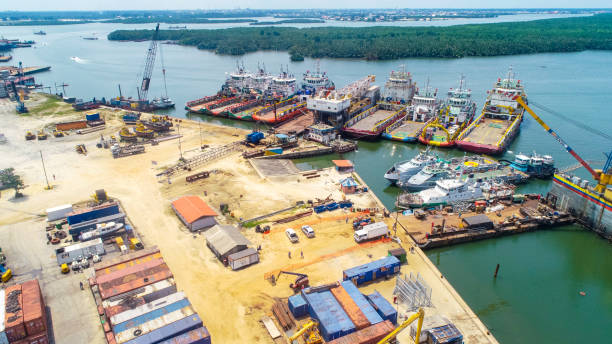
Nigeria’s maritime sector in 2026 is going through a noticeable shift. The industry is recording higher cargo volumes, stronger vessel traffic, and ongoing port reforms, but it is also still dealing with long-standing issues like congestion, evacuation delays, and infrastructure pressure—especially in Lagos ports.
Recent reports show that Nigerian ports handled over 32.38 million tonnes of cargo in Q1 2026, reflecting steady growth in trade activity across the country.
At the same time, broader maritime data shows rising vessel traffic and stronger export performance, driven by reforms and increased international shipping activity.
In simple terms:
Nigeria’s maritime industry is expanding fast, but the system is still adjusting to handle the pressure.
🚢 Cargo traffic is rising across Nigerian ports
One of the biggest maritime updates in 2026 is the continued increase in cargo movement.
Key trends:
- Higher import and export volumes
- More frequent vessel arrivals
- Growth in container traffic and TEU movement
- Increased activity at Lekki Deep Sea Port and Onne Port
Even though vessel numbers in some periods remain stable, total cargo tonnage is increasing because larger ships are now calling at Nigerian ports.
This means:
- Fewer ships, but bigger loads
- Higher pressure on port infrastructure
- More demand for faster cargo handling systems
⚓ Lekki Deep Sea Port is changing maritime operations
Lekki Port is becoming one of the most important updates in Nigeria’s maritime industry.
It is helping to:
- Handle larger vessels that older Lagos ports cannot efficiently manage
- Reduce pressure on Apapa and Tin Can Island ports
- Improve cargo flow for deep-sea shipping lines
Because of its modern design and deeper draft, it is increasingly seen as Nigeria’s future hub for high-volume container shipping.
🚧 Lagos ports still dominate—but also slow down the system
Despite new developments, Apapa and Tin Can remain the busiest ports in Nigeria.
But they still face:
- Heavy truck congestion
- Container backlog at terminals
- Slow evacuation of cleared cargo
- Road access bottlenecks around port corridors
Even when customs clearance is completed, logistics delays often continue outside the port gate.
So the reality is:
Nigeria’s maritime system is growing—but Lagos still controls most of the pressure points.
🧾 Maritime reforms are gaining momentum
Recent updates show strong government focus on improving port performance and trade efficiency.
Key reform areas include:
1. Digital trade systems
- Expansion of paperless customs processes
- Faster documentation handling
- Reduced manual processing
2. Infrastructure upgrades
- Rehabilitation of Apapa and Tin Can port facilities
- Road and access improvements around port corridors
- Private sector investments in terminal expansion
3. Regional trade positioning
Nigeria is also trying to position its ports as a West African logistics hub under AfCFTA, competing with regional ports in Ghana, Togo, and Benin.
📈 Growth in exports and vessel tonnage
Another important maritime update is the shift in trade structure.
- Export activity is increasing steadily
- Vessel tonnage is rising due to larger ships
- Ports are handling more efficient shipping patterns
This indicates that Nigeria is slowly moving from just import-heavy activity toward a more balanced trade system.
⚠️ Challenges still affecting the maritime sector
Even with growth and reforms, key challenges remain:
1. Port congestion
- Especially in Lagos
- Causes delays in cargo evacuation
- Increases demurrage and storage costs
2. Truck and inland logistics bottlenecks
- Limited truck availability
- Traffic around Apapa axis
- Delays between port and warehouse movement
3. Documentation and inspection delays
- Multi-agency checks still slow down clearance
- HS code and valuation disputes remain common
🚚 Where Travo.ng fits into maritime operations
Maritime activity doesn’t stop at the port—it depends on movement coordination
Behind every shipment, there are people managing:
- customs clearance
- cargo tracking
- supplier coordination
- port inspections
- warehouse distribution
- international business travel
And all of these require constant movement between airports, ports, and business locations.
🚖 How Travo.ng supports maritime logistics
Travo.ng helps businesses stay operational during maritime activities by handling:
- Airport pickup for import/export managers and foreign partners
- Executive transport across Lagos port corridors
- Hotel booking for shipping agents and international visitors
- Corporate travel coordination for logistics teams
- Time-sensitive mobility during cargo clearance and inspection cycles
In a maritime system where cargo can be delayed, efficient movement of people helps keep operations running smoothly.
