


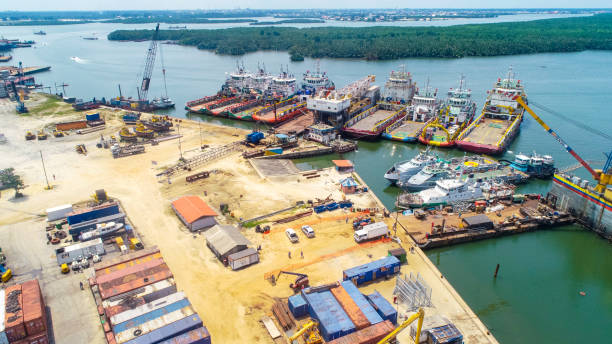
Apapa Port remains Nigeria’s busiest maritime gateway, handling a significant share of the country’s imports. For businesses bringing goods into Nigeria, understanding customs procedures at Apapa can help reduce delays, avoid unnecessary costs, and improve cargo clearance efficiency.
While Nigeria Customs Service has introduced more digital processes in recent years, importers still need to navigate documentation requirements, inspections, duty payments, and regulatory approvals before cargo can leave the port.
What happens before cargo arrives at Apapa Port?
Successful customs clearance often begins before a vessel reaches Nigerian waters.
Importers typically need to complete:
- Form M processing through an authorized bank
- Pre-Arrival Assessment Report (PAAR) requirements
- Shipping documentation preparation
- Product-specific permits where applicable
- Customs classification verification
Preparing these documents early helps reduce the risk of delays after cargo arrival.
Step 1: Cargo arrival and manifest submission
When a vessel arrives at Apapa Port, the shipping line submits a cargo manifest to the Nigeria Customs Service.
The manifest contains details such as:
- Consignee information
- Cargo description
- Container numbers
- Port of origin
- Shipment details
Customs uses this information to begin cargo assessment and verification processes.
Step 2: Documentation review and declaration
Once the shipment arrives, importers or their licensed clearing agents submit documentation for customs processing.
Common documents include:
- Commercial invoice
- Bill of lading
- Packing list
- PAAR
- Form M
- Insurance certificate
- Product permits where required
Accuracy is critical at this stage because discrepancies can trigger additional inspections or delays.
Step 3: Customs valuation and duty assessment
Customs reviews the shipment and determines:
- Applicable import duties
- Taxes and levies
- Customs value
- Product classification
Incorrect HS code classifications are among the most common reasons shipments face additional scrutiny.
Step 4: Inspection and examination
Depending on the cargo risk profile, Customs may require:
- Scanner examination
- Physical inspection
- Joint examination with other government agencies
Some shipments pass through with minimal intervention, while others undergo more detailed checks.
Products regulated by agencies such as NAFDAC or SON may require additional approvals before release.
Step 5: Payment confirmation and release approval
After duties and applicable charges have been paid:
- Customs validates payment records
- Inspection results are reviewed
- Release authorization is issued
Only after this approval can the container proceed toward evacuation from the terminal.
Step 6: Container evacuation from Apapa Port
Many importers assume clearance ends once Customs releases cargo.
In reality, evacuation can be one of the most challenging parts of the process due to:
- Truck scheduling constraints
- Port access restrictions
- Traffic congestion around Apapa
- Terminal loading delays
Planning transportation early can significantly reduce post-clearance waiting time.
Common reasons cargo clearance gets delayed at Apapa
Documentation errors
Issues such as:
- Incorrect cargo descriptions
- Missing permits
- Invoice inconsistencies
- Wrong HS codes
can delay approval and increase inspection requirements.
Regulatory agency reviews
Depending on cargo type, approvals may be required from:
- NAFDAC
- SON
- Quarantine Services
- NDLEA
- Other regulatory agencies
Each approval layer can affect overall clearance timelines.
Port congestion
Even when documentation is complete, congestion can slow:
- Container movement
- Truck access
- Terminal operations
This is particularly noticeable during peak import seasons.
How businesses can speed up customs clearance
Experienced importers often reduce delays by:
- Completing documentation before cargo arrival
- Using licensed and experienced clearing agents
- Ensuring accurate HS code classification
- Arranging transport before release approval
- Monitoring shipment status closely
Preparation is often the difference between a smooth clearance process and costly delays.
How Travo.ng supports import and logistics operations
Supporting the people behind cargo clearance
Customs procedures involve more than paperwork. Import managers, clearing agents, suppliers, and logistics teams frequently move between airports, ports, warehouses, and business locations while coordinating shipments.
Travo.ng supports these operational needs through:
- Airport pickup services
- Executive transportation
- Corporate travel coordination
- Hotel reservations for visiting partners
- Vehicle hire services
- Business mobility support across Lagos and other major cities
For businesses managing imports through Apapa Port, efficient movement of personnel can help keep cargo operations running smoothly.
Why understanding Apapa customs procedures matters
Many import-related costs in Nigeria are not caused by shipping itself but by delays during clearance and evacuation.
Businesses that understand customs procedures at Apapa, prepare documentation properly, and plan logistics in advance are often better positioned to reduce costs, shorten delivery timelines, and improve supply chain reliability.
