


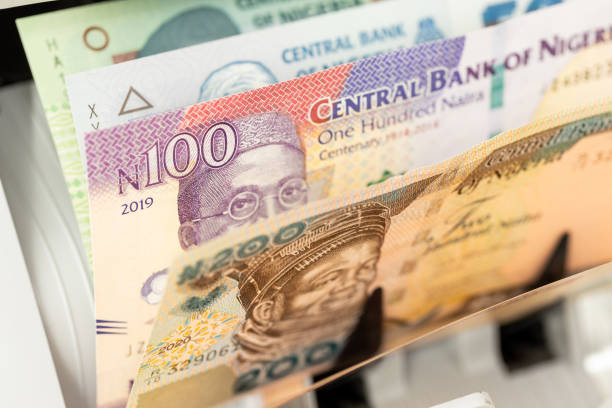
Exchange rate movements in Nigeria are not random swings of numbers on a screen. They are the result of pressure building up across oil earnings, imports, inflation, and policy decisions—and then releasing itself through the naira’s value against the dollar.
To understand what is happening in the FX market, you have to stop thinking of the naira as a “price” and start seeing it as a reflection of how much dollar supply Nigeria can actually access at any point in time.
The core idea: it’s a dollar supply problem, not just a currency problem
At the centre of every movement in the naira is one simple imbalance:
- Nigeria earns dollars mainly from oil, gas, and remittances
- Nigeria spends dollars heavily on imports, fuel, and external obligations
When inflows are stronger than outflows, the naira stabilises or strengthens.
When outflows dominate, the naira weakens.
This is why exchange rates in Nigeria tend to move in cycles rather than stable lines.
Why the naira has been swinging more visibly in recent years
Recent exchange rate behaviour is shaped by structural adjustments in the FX system:
1. FX reforms and market unification pressure
Nigeria has spent the last few years adjusting how the FX market works, especially around the official window and access to dollars. This has reduced artificial rigidity and allowed the rate to reflect real demand more directly.
That shift naturally creates volatility at first, because suppressed demand gets released into the system.
2. Oil revenue determines the “base level” of stability
Oil still plays a dominant role in dollar inflow.
So when:
- oil prices rise → FX liquidity improves → naira stabilises
- oil revenue weakens → dollar shortage tightens → naira comes under pressure
Even small changes in oil earnings can ripple through the FX market quickly.
3. Import dependency keeps dollar demand structurally high
Nigeria imports a large share of what it consumes—fuel components, machinery, pharmaceuticals, electronics, and even raw materials for local production.
That means:
- every increase in economic activity also increases dollar demand
- businesses constantly need FX to restock or expand
So even when the economy grows, FX pressure doesn’t automatically reduce.
4. Interest rates and investor confidence
Foreign investors react strongly to Nigeria’s monetary policy stance.
When returns look attractive and policies appear stable:
- portfolio inflows increase
- dollar supply improves
- the naira stabilises
When uncertainty rises:
- capital exits or slows
- FX pressure returns quickly
5. Remittances and diaspora inflows
Diaspora remittances are one of Nigeria’s most stable FX sources. But the channel matters.
When more inflows go through official channels:
- liquidity improves
- official market strengthens
When flows shift to informal channels:
- official FX tightens
- parallel market pressure increases
What recent trends are actually showing
Recent data points suggest something important: Nigeria is not in a pure collapse cycle anymore, but in a rebalancing phase.
For example, market movements in 2026 show periods where the naira has traded within a relatively tighter band compared to earlier volatility, supported by stronger FX liquidity and policy interventions.
At the same time, the currency still reacts quickly to demand shocks, especially corporate FX demand spikes that temporarily push rates upward at the official window.
So what you’re seeing is not stability in the strict sense—it is managed fluctuation inside a narrower range.
The parallel market vs official market gap still matters
Even with reforms, Nigeria still operates with two important price signals:
- Official market: reflects regulated transactions and institutional flows
- Parallel market: reflects real-time scarcity and retail demand pressure
The gap between them tells you something critical:
- small gap = better FX liquidity and policy alignment
- large gap = distortion and unmet demand in the system
A narrowing spread is usually a sign of improving coordination, not necessarily currency strength.
What typically triggers sudden exchange rate movements
In Nigeria, FX shifts are usually triggered by specific events:
- oil price drops or production disruptions
- large import cycles (especially fuel and manufacturing inputs)
- corporate repatriation of profits
- fiscal pressure and government spending cycles
- central bank liquidity operations
- seasonal demand spikes (end-of-year import cycles, school fees abroad)
These triggers don’t just move the rate—they change market expectations, which is often more important.
The underlying pattern: slow drift, sharp adjustments
Nigeria’s exchange rate history tends to follow a familiar structure:
- long periods of controlled stability or mild drift
- sudden adjustments when pressure builds
- new equilibrium at a weaker or slightly stronger level
- another cycle begins
This is why analysts often describe the naira as moving in steps, not lines.
Bottom line
Exchange rate movements in Nigeria are fundamentally about how the economy earns and spends dollars. Oil inflows, import dependence, investor confidence, and policy decisions all feed into the same pressure point: foreign exchange availability.
Recent reforms have made the system more transparent and less artificially controlled, which reduces extreme shocks—but also makes real economic pressure more visible in the exchange rate itself.
In simple terms:
the naira is now reacting more to reality than to protection.
If you want, I can break this further into black market mechanics, or explain why Nigeria cannot fully stabilise FX without export diversification.
