


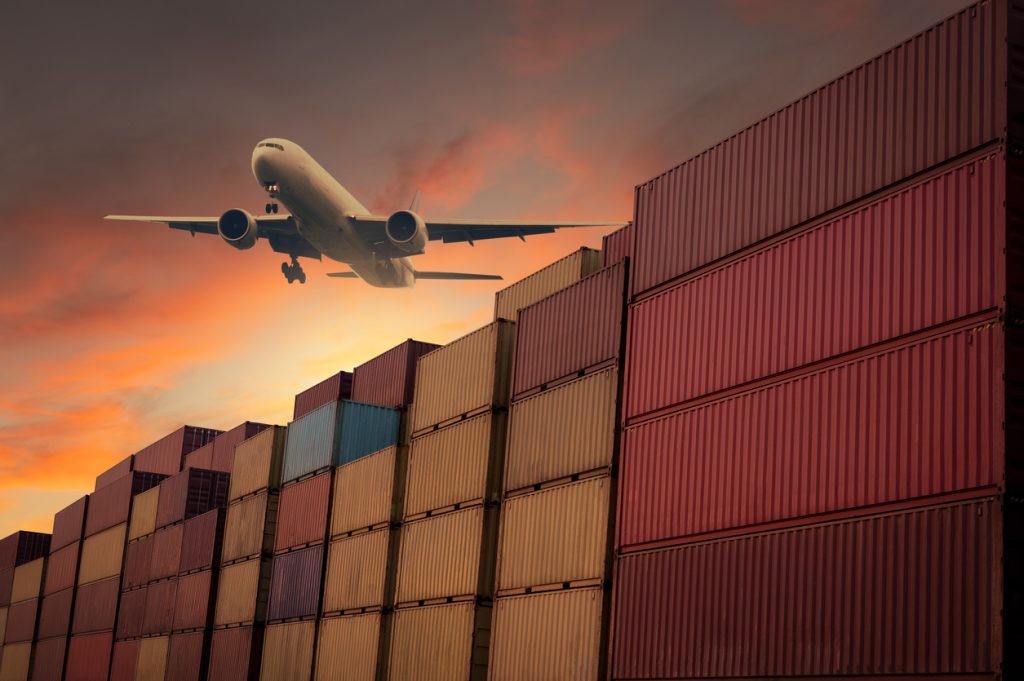
Container consolidation services allow businesses to ship goods without paying for an entire container. Instead of booking a full container for one shipment, cargo from different importers is combined into the same container and transported to a common destination.
This is commonly known as Less than Container Load (LCL) shipping. It can be particularly useful for Nigerian importers, retailers and SMEs that purchase goods internationally but do not have enough cargo to fill a full container. The Nigerian Shippers’ Council has also identified shipment consolidation as an option that can help shippers negotiate more competitive freight costs. (Nigerian Shippers Council)
How Container Consolidation Works
The process normally begins when an importer provides the cargo details, including the type of goods, dimensions, weight, origin and destination.
The logistics provider then receives or collects the goods at the agreed origin location. Compatible shipments heading towards the same destination are grouped together and loaded into a shared container.
After the container reaches its destination, the cargo is deconsolidated. Individual shipments are separated and made available for customs clearance and final delivery.
This approach allows several businesses to share transportation capacity instead of each importer paying for an entire container.
When LCL Shipping Makes Sense
Container consolidation is generally useful when your shipment is too small to justify a full container.
For example, an importer buying cartons of clothing, footwear, household products or other general merchandise from China may not have enough cargo to fill a 20-foot container. Rather than waiting until the business has enough stock, the importer can consider an LCL shipment.
It can also be useful for businesses testing a new product before committing significant capital to a full container.
However, LCL is not automatically cheaper in every situation. Handling, documentation, warehouse, destination and other charges should be included when comparing LCL with FCL.
LCL vs Full Container Load
With Full Container Load (FCL), the importer books the container for their own cargo. This can make sense when the shipment is large enough to use most or all of the available space.
With LCL, cargo belonging to multiple shippers shares container space.
The choice depends on shipment volume, cargo characteristics, destination, required delivery timeline and total logistics cost.
For smaller shipments, LCL can provide access to international ocean freight without waiting to accumulate enough goods for a full container.
What Goods Can Be Consolidated?
Consolidation can be suitable for many types of general commercial cargo, including:
- Fashion products
- Electronics and accessories
- Household goods
- Furniture components
- Machinery parts
- Auto parts
- Building materials
- Retail merchandise
- Business supplies
The logistics provider should confirm whether your particular goods can travel in a consolidated shipment. Dangerous goods, oversized cargo, fragile products and certain regulated commodities may require special handling or separate arrangements.
Consolidating Goods From China to Nigeria
China is an important sourcing market for Nigerian businesses, and consolidation can be useful for importers purchasing relatively small quantities from overseas suppliers.
An importer may have goods from different suppliers that need to reach the same destination warehouse. Coordinating collection, temporary storage, cargo sorting, documentation and consolidation can make the process easier to manage.
The key is to coordinate suppliers and shipping schedules properly so that cargo does not remain unnecessarily at the origin warehouse waiting for other shipments.
Costs to Consider
The quoted freight rate is only one part of the total cost.
Before booking, ask for a breakdown covering:
- Freight charges
- Origin handling
- Consolidation fees
- Documentation
- Customs-related charges
- Port and terminal fees
- Deconsolidation charges
- Storage
- Local transportation
- Final delivery
The Nigerian Shippers’ Council specifically advises shippers to examine additional services, applicable fees and other charges when reviewing freight costs. (Nigerian Shippers Council)
A clear quotation helps you compare consolidation with a full-container shipment based on the actual landed cost.
Common Problems With Container Consolidation
LCL shipments can involve more handling because cargo from different importers is packed into and later removed from the same container.
Potential issues include delays caused by another shipment, cargo damage from poor packing, incorrect documentation, storage charges and unexpected destination fees.
Proper packaging and accurate cargo information are therefore important. Your logistics provider should also explain the expected schedule, handling process and charges before the shipment is booked.
How Travo.ng Can Help With Container Consolidation
Travo.ng can help businesses coordinate international cargo logistics when a shipment does not require a full container.
For SMEs and individual importers, this can include helping coordinate cargo movement, freight arrangements, shipment planning and delivery from the arrival point to the required Nigerian destination.
Before booking, provide accurate cargo dimensions, weight, origin, destination and commodity details so the appropriate shipping arrangement can be considered.
Plan Your Shipment Around Volume
Container consolidation can give smaller importers access to international sea freight without committing to a complete container. The most important step is comparing the total cost of LCL against FCL, rather than looking at the advertised freight rate alone.
For Nigerian businesses importing smaller quantities, proper consolidation planning can make international sourcing more manageable while allowing inventory to move before there is enough volume for a dedicated container.
