


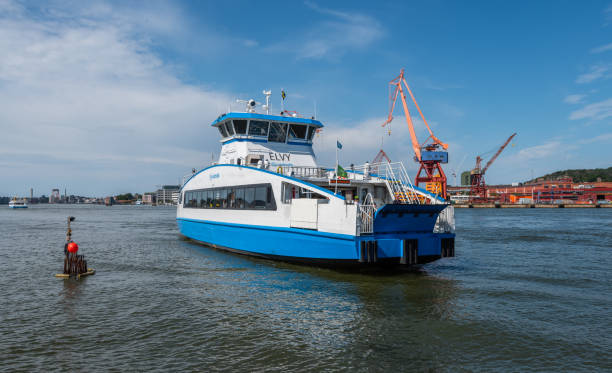
Battery-powered ferry Lagos is becoming an important part of the city’s transition towards cleaner and more sustainable water transportation. Battery-powered ferries use rechargeable battery systems and electric motors instead of conventional petrol or diesel propulsion, offering quieter journeys and reducing direct exhaust emissions during operation.
What Is a Battery-Powered Ferry?
A battery-powered ferry is a passenger vessel that stores electrical energy in rechargeable batteries and uses electric motors for propulsion.
Instead of carrying fuel for a conventional combustion engine, the ferry is connected to charging infrastructure when its batteries need to be replenished. Depending on the vessel design, battery capacity and operating conditions, an electric ferry can complete multiple passenger trips between charging sessions.
Battery-Powered Ferries in Lagos
Lagos is developing a major electric ferry network through the Omi Eko Project.
The project is designed to establish 15 structured ferry routes covering approximately 140 kilometres, connect 25 upgraded and expanded ferry terminals, and introduce 75 state-of-the-art electric vessels. The vessels are intended for passenger transportation and can carry up to 440 passengers depending on their configuration.
The project is being implemented through the Lagos State Waterways Authority with support from the European Investment Bank, French Development Agency and European Union.
Omi Eko Battery-Powered Ferry Project
The Omi Eko Project is designed to modernise Lagos’s inland water transportation system.
The project includes:
- Battery-powered electric ferries
- Structured ferry routes
- Modern passenger terminals
- Electric charging facilities
- Improved waterways
- Maintenance facilities
- Intelligent transport systems
- Connections with other forms of public transportation
The goal is to create a safer, more reliable, affordable and sustainable water transportation network.
Electric Ferry Routes in Lagos
The planned Omi Eko network will cover approximately 140 kilometres of waterways through 15 structured routes.
The wider Lagos ferry network already connects areas such as:
- Ikorodu
- Ijede
- Badore
- Falomo
- Ikoyi
- Victoria Island
- Marina
- Ebute Ero
- CMS
- Oworonshoki
- Ebute Ojo
- Liverpool
- Ibeshe
- Lekki
- Epe
- Badagry
Existing ferry routes should be distinguished from the planned Omi Eko network because the new electric ferry system is still being implemented.
Battery-Powered Ferry Charging Stations
Charging infrastructure is one of the most important requirements for a battery-powered ferry network.
Omi Eko plans include 25 ferry terminals and jetties, with selected facilities equipped with power generation and electric charging infrastructure. Project documentation identifies 12 terminals with charging facilities.
The charging network will allow electric ferries to recharge between operating cycles and support regular passenger services.
Caverton Battery-Powered Ferry
Private-sector marine companies are also developing battery-electric ferry technology in Lagos.
Caverton Marine and ExploMar demonstrated the Electric OMIBUS at Falomo Jetty in Lagos in 2025. The 12-metre, 28-seat ferry uses two 125 kWh batteries and twin electric propulsion systems. During testing, it achieved a maximum speed of 32 knots and a fully loaded cruising range of up to three hours at 10–15 knots. Its 120 kW fast-charging system can recharge the vessel in approximately one hour.
The vessel demonstrates how battery-powered marine transportation can be adapted for commercial passenger operations in Lagos.
In April 2026, ExploMar announced a deal with Caverton for 20 electric propulsion systems and an energy station as part of the expansion of electric ferry operations in Lagos.
LAGFERRY Battery-Powered Boats
LAGFERRY is also planning to introduce electric-powered boats into its fleet.
In January 2026, the Lagos State Government announced that electric boats were planned for introduction into the LAGFERRY fleet during the year. LAGFERRY stated that lower operating and maintenance costs associated with electric vessels could help reduce fares for daily commuters.
This initiative is separate from the larger Omi Eko Project, although both contribute to the development of cleaner water transportation in Lagos.
Benefits of Battery-Powered Ferries
Reduced Direct Emissions
Battery-electric ferries do not produce direct exhaust emissions while operating, helping reduce local air pollution around waterways and ferry terminals.
Quieter Journeys
Electric motors generally operate more quietly than conventional marine engines, providing a more comfortable passenger experience.
Lower Fuel Dependence
Battery-powered vessels reduce dependence on petrol and diesel for marine propulsion.
Potentially Lower Operating Costs
Electric propulsion can reduce fuel and certain maintenance costs compared with conventional engines. Actual savings depend on electricity prices, charging infrastructure, battery performance and vessel utilisation.
Reduced Road Congestion
Expanding ferry transportation can encourage passengers to use waterways instead of roads for suitable journeys, helping reduce pressure on busy Lagos roads.
Battery-Powered Ferry for Daily Commuters
Battery-powered ferries can be particularly useful for workers and students travelling regularly across Lagos waterways.
Passengers living in areas such as Ikorodu, Badore, Ijede and other waterfront communities can use suitable ferry connections to reach commercial areas around Lagos Island, Ikoyi, Victoria Island and other destinations.
Reliable electric ferry services can provide commuters with an alternative to lengthy road journeys.
Battery-Powered Ferry for Businesses
Businesses can benefit from cleaner ferry transportation for employees, clients and corporate travel.
Companies operating near Lagos waterways can use scheduled ferry services where available, while private boat arrangements may provide additional flexibility for corporate events, group movements and specialised transportation.
Battery-Powered Ferry for Tourism
Battery-powered ferries can also support tourism and leisure transportation.
Because electric propulsion is quieter than conventional engines, electric boats can provide comfortable experiences for sightseeing, waterfront tours and organised boat trips.
As Lagos develops its blue economy, electric marine transportation can support tourism while reducing the environmental impact of water-based activities.
Environmental Benefits
Battery-powered ferries can contribute to cleaner waterways and urban mobility.
They can reduce direct exhaust emissions, lower marine engine noise and reduce dependence on fossil fuels. When charging is supported by cleaner electricity sources, the overall environmental benefits can be greater.
The Omi Eko Project is specifically designed to provide environmental and socioeconomic benefits through cleaner waterborne public transportation.
Is Battery-Powered Ferry Service Available in Lagos?
Battery-electric ferry technology is already being demonstrated and developed in Lagos, but passengers should distinguish between electric vessel demonstrations, planned fleets and fully operational public electric ferry routes.
LAGFERRY announced plans to introduce electric boats into its fleet in 2026, while the Omi Eko Project is developing a much larger electric ferry network.
The Omi Eko Project is still progressing through its implementation stages. In July 2026, Lagos State commenced the Project Management, Operations and Design Consultancy phase of the project.
Passengers should therefore confirm the current operator, route, terminal, schedule, fare and vessel availability before planning a journey.
How Travo.ng Can Help
Travo.ng can help coordinate battery-powered ferry transportation, electric boat services, water transfers and marine travel arrangements in Lagos where suitable operators and services are available.
Customers can provide their departure location, destination, travel date, number of passengers and preferred departure time to help identify an appropriate water transportation option.
Plan Your Battery-Powered Ferry Lagos Journey
Battery-powered ferries represent an important development in Lagos’s future transportation system.
Through Omi Eko, Lagos is developing structured ferry routes, modern terminals, charging infrastructure and a large fleet of electric passenger vessels. Private-sector projects such as the Electric OMIBUS are also demonstrating the potential of battery-powered commercial ferry transportation in Lagos.
As electric ferry services continue to expand, passengers should confirm the current route, operator, terminal, fare, schedule and vessel availability before travelling.
Travo.ng can help coordinate Lagos battery-powered ferry and sustainable water transportation arrangements based on your route, schedule, passenger numbers and travel requirements.
