


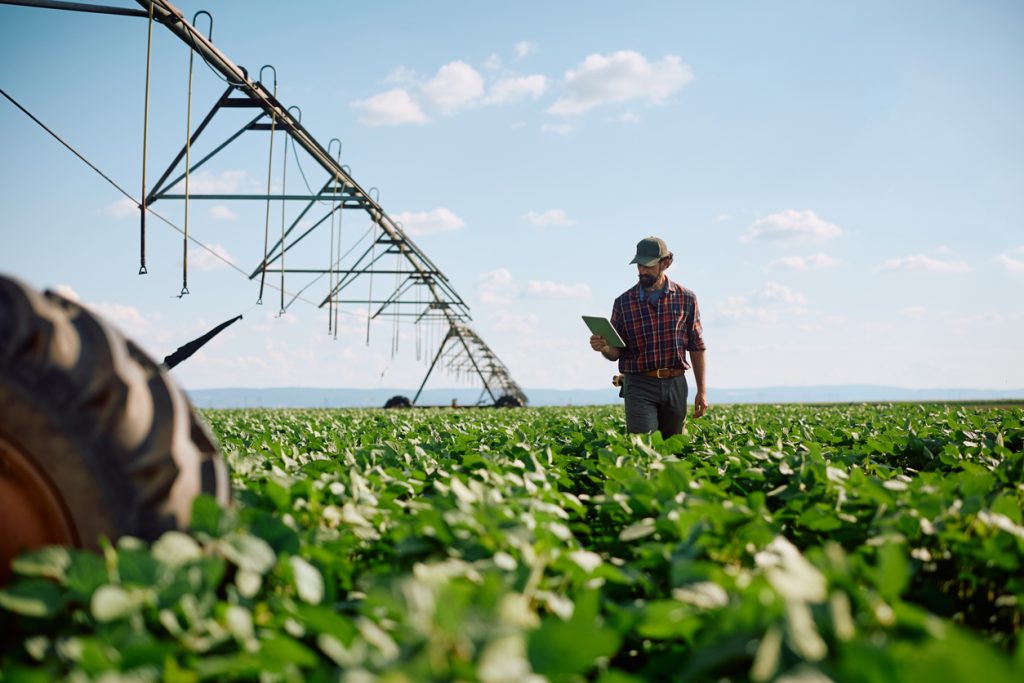
Knowing how to identify poor-performing areas of farmland can save a farmer from wasting fertiliser, labour, water, seed, and money on sections of a field that are already struggling.
On many Nigerian farms, poor performance does not happen evenly. One part of a maize field in Kaduna may remain green and productive while another produces shorter plants. A cassava farm outside Abeokuta may show patches where roots develop poorly, even though the same planting method was used across the entire plot.
Finding these weak areas early makes it easier to investigate what is happening and take corrective action before harvest.
Start With Visible Differences Across the Field
Regular field inspection remains one of the simplest ways to identify problems.
Farmers and field managers should look beyond individual unhealthy plants and search for patterns. If several neighbouring rows show similar symptoms, the problem may be connected to soil, drainage, pests, planting depth, or nutrient availability.
Common warning signs include:
- Yellow or pale leaves
- Uneven plant height
- Poor germination
- Smaller leaves or fruits
- Wilting in specific sections
- Waterlogged patches
- Unusually dry soil
- Repeated pest damage
Walking the same field every week also makes changes easier to notice.
Compare Crop Growth Instead of Guessing
A field can look healthy from the roadside while still containing low-yield sections.
One practical method is to divide the farm into zones and compare crop performance. For example, a 20-hectare maize farm can be separated into smaller observation areas. Plant height, leaf colour, soil moisture, pest activity, and expected yield can then be recorded for each zone.
This approach gives the farmer something measurable rather than relying entirely on memory.
If one section consistently produces less than neighbouring areas, it becomes a priority for further investigation.
Use Satellite and Drone Data to Identify Poor-Performing Areas of Farmland
For larger commercial farms, remote sensing can make field monitoring faster.
Satellite imagery and agricultural drones can reveal differences in crop vigour that may be difficult to notice from ground level. Vegetation maps, including NDVI-based monitoring, can highlight areas where plants are developing differently from the rest of the field.
A weak zone does not automatically reveal the cause. It simply tells the farm manager where to investigate.
The next step may involve checking:
- Soil fertility
- Soil pH
- Moisture levels
- Irrigation coverage
- Pest infestation
- Disease symptoms
- Compacted soil
- Drainage problems
This targeted inspection can be much more efficient than treating an entire farm unnecessarily.
Soil Testing Can Explain Persistent Weak Zones
Some poorly performing areas return every planting season.
When this happens, soil testing becomes important. Samples should ideally be taken separately from healthy and weak areas rather than mixing soil from the entire farm into one sample.
For example, if a vegetable farm near Ibadan repeatedly performs poorly in one corner, testing that section separately may reveal low nitrogen, unsuitable pH, drainage problems, or another soil limitation.
The results can help farmers decide whether to apply fertiliser, organic matter, lime, drainage improvements, or other treatments.
Keep Records From One Season to the Next
Farm performance becomes easier to understand when records are maintained.
Marking problem areas on a simple farm map, GPS application, or digital field-management platform allows the farmer to compare results after each season.
Record information such as:
- Planting date
- Seed variety
- Fertiliser application
- Rainfall or irrigation
- Pest treatments
- Harvest quantity by section
If the same locations underperform repeatedly, the evidence becomes much stronger.
Field Logistics Also Matter on Larger Farms
Monitoring farmland often requires more than agricultural knowledge. Agronomists, soil-sampling teams, drone operators, equipment, and farm managers may need coordinated transport between cities and remote farming communities.
Travo.ng can support the movement side of these operations through vehicle hire, transport coordination, courier services, and logistics arrangements where appropriate. For businesses managing farms in several Nigerian states, organised transport can make inspections, sample movement, and field visits easier to coordinate.
The goal is not simply to spot weak crops. Farmers need to identify poor-performing areas of farmland, determine the underlying cause, take corrective action, and measure whether the intervention actually improves the next harvest.
Early detection gives farm managers more time to act and helps direct limited resources toward the parts of the farm that need them most.
