


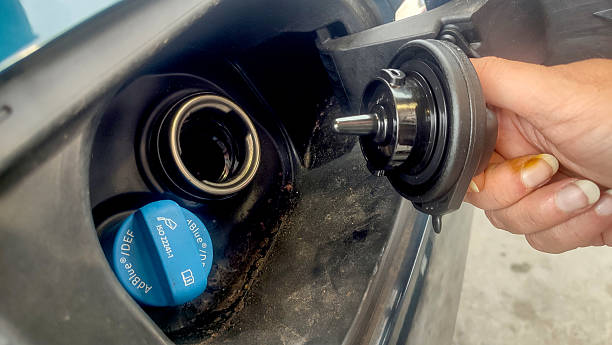
If you are checking the diesel price in Nigeria, you are probably trying to answer a practical question: How much will diesel add to my transport, delivery, generator, or logistics costs?
Diesel, also called Automotive Gas Oil (AGO), is particularly important to Nigerian logistics because it powers many trucks, buses, generators and other commercial vehicles. When diesel prices move sharply, the effect does not stop at the filling station. It can influence delivery charges, interstate transport costs, warehouse operations and the price businesses charge customers.
The latest National Bureau of Statistics (NBS) data available for May 2026 put the average retail price of diesel at ₦3,277.47 per litre, up 32.44% from ₦2,474.69 in April and 86.40% from ₦1,758.26 in May 2025.
For anyone moving goods or people around Nigeria, that is not just a fuel statistic. It can directly affect the cost of getting something from one location to another.
How much is diesel in Nigeria right now?
The latest nationwide NBS figure available is ₦3,277.47 per litre for May 2026. However, this should not be treated as a fixed pump price for every location.
Diesel prices vary considerably between states and suppliers. In May, NBS recorded an average of ₦3,785.84 per litre in Nasarawa, while Kogi recorded ₦2,823.85. The South-West had the lowest zonal average at ₦3,227.55, while the North-West recorded the highest at ₦3,313.60.
This difference matters when planning interstate logistics.
For example, a truck operator moving goods from Lagos to Abuja does not simply calculate the cost using one national diesel figure. The actual cost can depend on where fuel is purchased, the vehicle’s fuel efficiency, traffic conditions, the load being carried and whether the truck has to make additional stops.
Why diesel prices affect delivery costs so quickly
Diesel is one of the running costs behind many commercial logistics operations.
Consider a delivery vehicle that uses 100 litres of diesel for a particular trip. At ₦3,277.47 per litre, the fuel alone would represent about ₦327,747.
If the same trip required 150 litres, the fuel component would be approximately ₦491,621.
That does not mean every delivery will cost these amounts. Actual consumption varies by vehicle, route, load, traffic and driving conditions. But the calculation shows why a significant change in AGO prices can quickly affect the economics of long-distance transport.
This is particularly relevant for:
- Interstate parcel deliveries
- Trucking and cargo movement
- Business-to-business deliveries
- Relocation services
- Fleet operations
- Airport logistics
- Distribution between warehouses and customers
What has happened to diesel prices in Nigeria in 2026?
Diesel prices have been unusually volatile.
According to NBS data, the national average moved from ₦1,420.17 per litre in February 2026 to ₦1,648.08 in March, ₦2,474.69 in April and ₦3,277.47 in May.
That sharp movement makes it difficult for transport operators and businesses to rely on old delivery budgets.
A logistics quote calculated several months ago may no longer accurately reflect the cost of operating a vehicle today.
There are also wider international factors. Global diesel prices surged in August 2026 amid supply disruptions and geopolitical tensions, putting additional pressure on fuel markets internationally.
At the same time, Nigeria’s growing domestic refining capacity is changing the local fuel market. Dangote Refinery, for example, announced reductions in diesel ex-depot prices earlier in 2026, showing how refinery pricing and competition can influence downstream costs.
Why diesel can cost more in one Nigerian state than another
It is easy to assume that diesel should cost roughly the same everywhere because the product is the same.
In practice, location matters.
The price a customer eventually pays can be influenced by:
- Depot and wholesale prices
- Distance from supply points
- Transportation costs
- Availability of diesel in the area
- Local demand
- Distributor margins
- Changes in international oil prices
- Exchange-rate movements
- Refinery and import supply conditions
This is one reason a logistics company planning a Lagos-to-Kano movement, for example, needs to think beyond the price of diesel at a particular Lagos filling station.
The route itself becomes part of the operating cost.
How diesel prices affect Lagos-to-Abuja and other interstate deliveries
Long-distance routes are especially sensitive to fuel prices.
Take a typical interstate delivery involving Lagos, Ibadan, Benin City, Onitsha, Enugu, Abuja or Kano. Fuel is only one part of the operating cost, but it is a major one.
A logistics operator also has to account for:
- Vehicle maintenance
- Driver expenses
- Tolls and route-related charges
- Loading and unloading
- Vehicle depreciation
- Insurance
- Delays and traffic
- Return-trip arrangements
- Warehousing or temporary storage where required
This is why two delivery companies can quote different prices for what appears to be the same shipment.
One operator may be using a smaller vehicle, while another may be assigning a larger truck. One may consolidate several shipments on the same route, while another sends a vehicle specifically for one customer.
The cheapest quote is therefore not automatically the best option.
Why delivery prices do not fall immediately when diesel falls
Customers sometimes expect logistics charges to change immediately whenever fuel prices change.
The relationship is not always that simple.
A transport company may have already committed to a vehicle, driver, route and fuel purchase based on an earlier cost. There are also other operating expenses that do not fall just because diesel becomes cheaper.
Likewise, if diesel prices rise, a logistics company may not immediately increase every customer’s price. Existing contracts, agreed rates and competitive pressures can delay the effect.
For businesses, this is why it is better to review logistics costs periodically rather than changing delivery charges every time there is a fuel-price headline.
How businesses can control logistics costs when diesel is expensive
Businesses that send goods regularly should focus on reducing unnecessary vehicle movement rather than simply looking for the cheapest diesel.
Some practical approaches include:
- Consolidate shipments
If several customers are located along the same route, combining deliveries can reduce the number of separate trips. - Plan routes properly
Sending a vehicle across Lagos unnecessarily because of poor scheduling can waste both fuel and driver time. - Use the right vehicle size
A small parcel does not always require a large truck. Matching vehicle capacity to shipment size can improve efficiency. - Avoid unnecessary return trips
Where possible, plan backhaul or return deliveries rather than sending an empty vehicle back. - Book deliveries ahead of time
Urgent, poorly planned movements can cost more than scheduled deliveries because there is less opportunity to consolidate shipments. - Work with an experienced logistics provider
A provider familiar with Nigerian routes can help determine the appropriate vehicle and delivery arrangement instead of treating every shipment as a standalone trip.
Diesel price versus petrol price: why the distinction matters
Diesel and petrol are not interchangeable when discussing transport costs.
Petrol is widely used by private cars, motorcycles and many smaller vehicles. Diesel is particularly important for heavy-duty vehicles, commercial fleets, trucks, buses, industrial equipment and generators.
This means a change in diesel price in Nigeria can have a disproportionate effect on businesses involved in cargo movement and large-scale logistics.
It can also affect businesses indirectly. A manufacturer paying more to operate generators or move raw materials may eventually face higher production and distribution costs.
What should you check before accepting a delivery quote?
Don’t look at the diesel price alone.
Before agreeing to a logistics quote, check:
- Where the shipment is being collected
- Final delivery location
- Package or cargo weight
- Number of items
- Vehicle type
- Expected delivery timeline
- Whether loading and unloading are included
- Whether insurance is included
- Whether the quote covers door-to-door delivery
- Whether there are additional charges for difficult-to-access locations
For example, sending one small parcel from Lagos to Abuja is very different from moving several cartons, household belongings or commercial equipment between the same cities.
The route may be identical, but the logistics requirement is not.
When using a logistics company makes more sense than arranging transport yourself
For occasional deliveries, arranging your own transport may seem cheaper.
But once you factor in fuel, vehicle hire, driver coordination, loading, route planning and the risk of delays, the calculation can change.
This is particularly true for businesses that do not operate their own fleet.
A logistics provider can coordinate the movement without the business having to purchase fuel, find a driver, monitor the route and deal with every operational issue itself.
For customers moving goods within Nigeria, Travo.ng can be useful for coordinating delivery and logistics services based on the shipment and destination. Related services such as interstate delivery, cargo logistics and relocation support can also be considered where they fit the customer’s requirements.
How to budget for deliveries when diesel prices keep changing
If your business sends deliveries every week or every month, avoid building your entire budget around one diesel price.
Instead, monitor your average cost per delivery.
For example, if you normally spend ₦300,000 moving a particular volume of goods and diesel prices rise significantly, calculate how much of that ₦300,000 is actually fuel-related.
You may discover that fuel represents 30% of the cost rather than the entire cost.
That makes it easier to determine whether you need to:
- Adjust delivery fees
- Consolidate orders
- Change delivery frequency
- Use a different vehicle
- Negotiate a logistics contract
- Change your route or delivery schedule
This approach gives you a more realistic picture than simply reacting to every fuel-price increase.
What the current diesel market means for Nigerian logistics
The major lesson from the recent diesel price in Nigeria increases is that transport and logistics budgets need room for fuel-price volatility.
NBS recorded an average diesel price of ₦3,277.47 per litre in May 2026, but prices vary substantially across states and can change as supply conditions shift.
For customers, the practical response is not necessarily to stop moving goods. It is to plan movements more carefully, compare suitable logistics options and understand what is included in a delivery quote.
Whether you are sending a parcel from Lagos to Abuja, relocating household belongings, moving business inventory or arranging regular deliveries, the right logistics arrangement can make a significant difference to the final cost.
For planned deliveries and cargo movements across Nigeria, Travo.ng can help coordinate the transport and delivery side so you can focus on your business instead of managing every part of the journey yourself.
Related Travo.ng services to explore: Interstate Delivery, Courier Services, Cargo Logistics, Relocation Services, Business Logistics Support and Transport Coordination.
