


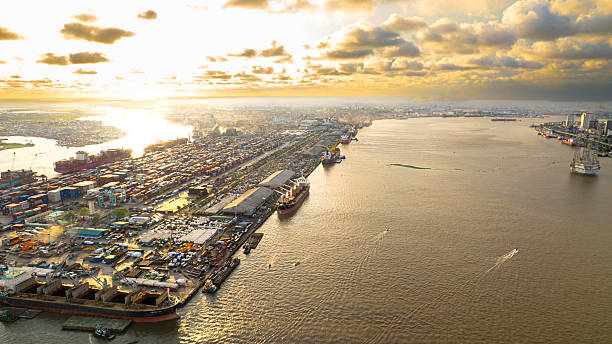
Onne Port remains one of Nigeria’s most strategically important seaports, especially for oil and gas logistics, project cargo, and containerized imports serving the South-South and South-East regions. Unlike Lagos ports that are often congested with general consumer imports, Onne operates more as a specialized, high-efficiency industrial hub—but still with its own operational bottlenecks.
In 2026, Onne is performing relatively better than Lagos ports in terms of clearance speed, but it is still affected by vessel scheduling delays, access road constraints, and oil-sector-driven traffic cycles.
Current operational situation at Onne Port
Recent shipping data shows Onne operating with moderate congestion levels and relatively shorter vessel waiting times compared to Lagos ports, with median waiting times around 1–2 days in many cycles.
However, in real operations, importers still report:
- occasional vessel queueing at anchorage
- variable terminal processing speed depending on cargo type
- delays during peak oil & gas supply movements
- inland evacuation challenges toward Port Harcourt and surrounding states
In simple terms:
ships move faster into Onne, but cargo movement inland can still slow down.
Why Onne Port behaves differently from Lagos ports
1. Oil & gas dominance
Onne is not just a general cargo port—it is heavily shaped by energy-sector logistics:
- offshore supply vessels
- oilfield equipment imports
- LNG and industrial cargo support
- large multinational oil company operations
This makes demand patterns more specialised and less consumer-driven.
2. Free zone structure advantage
Onne includes a major Oil and Gas Free Zone, which allows:
- faster customs processing for approved companies
- bonded warehousing advantages
- reduced friction for industrial imports
This is one reason clearance can be faster than Lagos in certain cases.
3. Deep draft and vessel capability
Onne can handle larger vessels used for:
- project cargo
- offshore equipment
- industrial shipments
This makes it a preferred entry point for heavy-duty imports.
Where delays still happen at Onne Port
Even with its advantages, Onne still faces real-world bottlenecks:
1. Inland logistics pressure
After clearance, movement can slow due to:
- limited trucking capacity compared to Lagos
- long-distance delivery routes to inland states
- fuel and haulage cost fluctuations
2. Oil-sector priority cycles
Because of offshore operations:
- oil service vessels can take priority windows
- commercial cargo may wait during peak offshore activity
3. Documentation and customs processing
Although faster in free-zone operations:
- non-free-zone cargo still undergoes standard clearance procedures
- inspections can still delay release depending on classification
4. Infrastructure and road connectivity
The East–West corridor leading from Onne to other regions often affects:
- cargo evacuation speed
- trucking turnaround time
- delivery predictability
Why Onne Port is gaining more importance in 2026
Recent national port performance trends show increased vessel traffic and rising cargo throughput across Nigerian ports, including Onne, as larger vessels and more diversified trade flows enter the system.
Key reasons for Onne’s rising relevance:
- reduced pressure compared to Lagos ports
- growing industrial and energy imports
- expansion of export-linked logistics
- improved regional trade integration
Real impact on importers and logistics operators
1. Faster vessel turnaround (relative advantage)
Compared to Apapa and Tin Can:
- shorter anchorage delays
- quicker berthing in many cases
2. More predictable industrial logistics
For oil & gas companies:
- more structured supply chain flow
- fewer consumer-goods congestion issues
3. Inland logistics remains the main challenge
Even with faster port processing:
- delivery to inland destinations can take longer
- trucking coordination is critical
- delays often shift from port to road
How importers are adapting to Onne Port conditions
Businesses using Onne are now:
- combining Onne for industrial imports and Lagos for consumer goods
- pre-booking inland haulage before cargo arrival
- using bonded warehouse strategies for faster release
- scheduling shipments around oil-sector peak cycles
- strengthening documentation readiness before vessel arrival
Where Travo.ng fits in real operational flow
Onne Port efficiency still depends on human coordination
Even though Onne is less congested, real operational delays still happen around:
- movement of import managers between airports and port
- logistics coordination for oil & gas procurement teams
- hotel and accommodation for visiting technical partners
- inland transport scheduling from Rivers State to other regions
- time-sensitive coordination during cargo release windows
How Travo.ng supports Onne-linked operations
Travo.ng helps businesses operating through Onne Port by coordinating:
- airport pickup and executive transport into Port Harcourt and surrounding areas
- logistics movement for import and oil & gas teams
- hotel booking for international suppliers and technical partners
- structured transport between port, warehouses, and project sites
- time-sensitive mobility planning for industrial cargo operations
While Onne Port handles cargo efficiently, Travo.ng focuses on the real-world movement and coordination that keeps industrial import operations running smoothly across the supply chain.
