


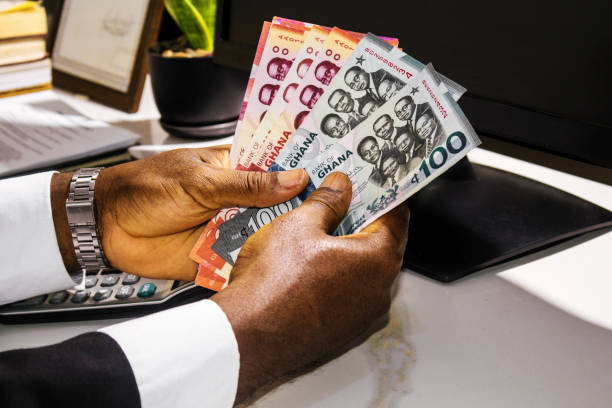
As of the latest available market data, the Ghanaian cedi is trading around:
- ₵11.4 – ₵11.8 per $1 (US dollar) in the official/interbank market
- ₵12.4 – ₵13.4 per €1 (Euro range depending on provider)
- ₵120 – ₵125 per ₦1,000 (Nigerian naira equivalent band)
In simple terms:
₵1 ≈ $0.085 – $0.09
What “today’s rate” really means in Ghana
The cedi doesn’t trade at one fixed number. It moves in a band because Ghana operates a managed exchange rate system where:
- Banks trade at official/interbank rates
- Forex bureaus quote slightly higher retail rates
- Demand spikes shift the market intraday
So “today’s rate” is really a live range, not a single figure.
Why the cedi moves like this
1. Export inflows (gold, cocoa, oil)
When export earnings are strong, dollar supply improves and the cedi stabilises.
2. Import demand pressure
Ghana imports fuel, machinery, and consumer goods—this constantly drives dollar demand.
3. Central Bank intervention
The Bank of Ghana smooths volatility by supplying FX when pressure builds, preventing extreme swings.
4. Investor inflows and confidence
Foreign investment and portfolio inflows can temporarily strengthen the cedi when sentiment improves.
What is actually happening in the market now
The current pattern shows:
- More stability compared to crisis periods
- Still mild depreciation pressure over time
- Short-term fluctuations driven by import cycles and FX liquidity
So the market is not collapsing or strengthening sharply—it is stabilising inside a managed range.
Real-life impact of cedi movements
Exchange rate movement in Ghana directly affects:
- Imported goods pricing (electronics, fuel, food inputs)
- Business operating costs
- Travel and hotel bookings
- Cross-border logistics and trade
This is where companies involved in travel and coordination—such as Travo.ng—operate in a practical sense. When FX shifts, the cost of flights, accommodation, airport transfers, and international logistics changes quickly, and businesses need structured systems to manage those movements without disruption.
Travo.ng — How FX volatility affects travel & logistics operations
Exchange rate pressure in real operations
In Ghana, exchange rate movement doesn’t stay in financial charts—it immediately affects:
- airport pickup and executive transfer pricing
- hotel and accommodation costs
- international travel bookings
- corporate logistics and guest coordination
When the cedi weakens, these services become more expensive because they are often dollar-linked.
Where Travo.ng fits in
Travo.ng supports structured travel and logistics coordination by helping individuals and businesses manage:
- airport arrival and pickup services
- hotel booking coordination
- executive travel logistics
- mobility and transport arrangements
- guest handling for corporate visits
The FX rate sets the cost environment, but operational coordination ensures smoother execution across travel and logistics needs.
