


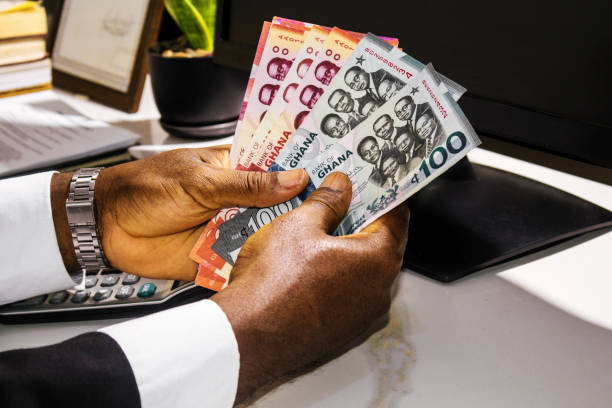
The Bank of Ghana (BoG) exchange rate policy refers to how Ghana’s central bank manages the value of the cedi against foreign currencies—mainly the US dollar—through a mix of market forces, inflation targeting, and strategic intervention.
Unlike a fixed exchange rate system, Ghana runs a flexible (managed) exchange rate regime, meaning the cedi is mostly determined by the market, but the central bank steps in when volatility threatens economic stability.
The core idea behind Bank of Ghana FX policy
The Bank of Ghana’s exchange rate approach is built around one main goal:
Price stability (keeping inflation and currency volatility under control).
According to the BoG, monetary policy is designed to maintain stability in prices, banking systems, and overall economic conditions .
In simple terms:
- the market sets the exchange rate direction
- the central bank smooths extreme movements
The official framework: inflation targeting + flexible exchange rate
Since 2007, the Bank of Ghana has operated under an inflation targeting framework combined with a flexible exchange rate system .
This means:
1. Inflation targeting
- The BoG focuses on keeping inflation within a target band
- Interest rates are adjusted to control price pressures
- Exchange rate stability is supported indirectly through inflation control
2. Flexible exchange rate system
- The cedi is not fixed to the dollar
- Its value moves based on supply and demand
- The central bank does not peg the currency
So the exchange rate is market-determined, but not completely free-floating.
How the Bank of Ghana actually manages the exchange rate
1. Market-driven pricing (primary mechanism)
The cedi’s daily value is determined by:
- FX demand (imports, debt payments, travel)
- FX supply (exports, remittances, reserves inflows)
Banks report transactions, and an interbank reference rate is produced from real market data .
2. Central bank intervention (stabilisation role)
When volatility becomes too high, the BoG can:
- supply dollars into the market
- smooth sudden spikes in demand
- reduce excessive short-term speculation pressure
This does not fix the rate—it only stabilises movement.
3. FX market reforms and transparency systems
In recent years, the Bank of Ghana has introduced new FX frameworks aimed at:
- improving transparency
- strengthening market confidence
- making FX operations more rule-based
These reforms are designed to reduce unpredictability in currency pricing .
4. Reserve management
The BoG uses foreign reserves to:
- support temporary FX shortages
- intervene during market stress
- stabilise import-related demand pressure
But reserves are limited, so intervention is strategic, not constant.
Why the cedi still fluctuates under this system
Even with a managed system, the cedi moves because:
- Ghana imports more than it exports in many cycles
- FX inflows depend heavily on commodities like gold and cocoa
- dollar demand is constant across sectors
- global USD strength affects emerging markets
So exchange rate pressure is often structural, not just policy-driven.
Why multiple FX rates can appear in practice
Even though BoG promotes a unified system, different effective rates can still exist due to:
- timing differences in FX access
- market liquidity constraints
- bank pricing margins
- demand vs supply gaps
This is why businesses may experience different rates in real transactions.
Impact of BoG exchange rate policy on businesses
The policy directly affects:
- import pricing and landed cost
- availability of dollars for trade
- inflation and consumer pricing
- investment confidence
- cash flow planning for importers
In short: FX policy shapes business survival and planning stability.
Where Travo.ng fits in real operational terms
Exchange rate policy and real-world movement in Ghana
While BoG policy shapes currency value, it also indirectly affects real operational services such as:
- airline ticket pricing
- hotel accommodation costs
- airport pickup and executive transport
- cross-border logistics coordination
- corporate travel planning
These services often carry indirect dollar exposure, meaning FX policy changes quickly affect budgets and execution timing.
How Travo.ng supports businesses in this environment
Travo.ng helps businesses operate smoothly within FX-sensitive conditions by coordinating:
- airport arrival and pickup logistics
- executive and corporate transport services
- hotel booking and accommodation planning
- structured travel management for business guests
- logistics coordination for international movements
While Bank of Ghana policy determines FX direction, Travo.ng focuses on execution—helping businesses reduce delays, inefficiencies, and operational uncertainty in real-world travel and logistics.
