


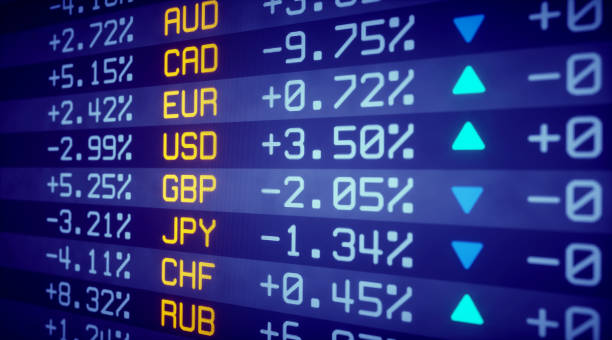
The foreign exchange market in Ghana is the system where the cedi is exchanged for foreign currencies, mainly the US dollar. But unlike a simple open market, Ghana’s FX system operates as a managed structure, where market forces and central bank intervention both shape the final exchange rate.
To understand cedi movements properly, you have to understand how the FX market itself is organised and how dollars actually flow through the economy.
What the foreign exchange market really does in Ghana
The FX market is where:
- importers buy dollars to pay for goods
- exporters convert foreign earnings into cedis
- businesses settle international payments
- individuals access FX for travel, tuition, and services
- government and institutions manage external obligations
At every point, the cedi’s value is being determined by supply and demand for foreign currency.
Structure of Ghana’s FX market
Ghana’s FX market is not a single unified system in practice. It operates through multiple channels:
1. Interbank / official market
This is the core regulated segment where:
- commercial banks trade FX
- large corporates access foreign currency
- pricing is influenced by central bank policy
This segment forms the benchmark reference rate.
2. Retail FX market (banks and forex bureaus)
This is where:
- individuals and SMEs access dollars
- smaller importers purchase FX
- retail pricing adjustments happen faster
Rates here are more responsive to demand pressure.
3. Informal / parallel market
This emerges when:
- demand exceeds official FX supply
- access to formal FX becomes restricted or delayed
- market participants seek faster settlement
This segment often reflects real-time scarcity conditions.
How exchange rates are actually formed
The cedi’s value is determined by a continuous balance between:
- FX inflows: cocoa exports, gold exports, oil revenue, remittances
- FX outflows: imports, debt servicing, fuel purchases, corporate payments
When inflows are strong, the cedi stabilises.
When outflows dominate, depreciation pressure builds.
Key players in Ghana’s FX market
1. Bank of Ghana
- sets monetary policy direction
- intervenes to reduce volatility
- manages foreign reserves
- regulates market liquidity conditions
2. Commercial banks
- primary FX access channel for businesses
- execute customer FX transactions
- distribute available foreign currency
3. Export sector
- gold and cocoa exporters bring in FX inflows
- critical stabiliser for the cedi
4. Importers and businesses
- consistent demand source for foreign currency
- major driver of FX pressure
5. Households and service demand
- tuition, travel, medical payments abroad
- retail FX demand segment
Why Ghana’s FX market is constantly under pressure
The FX market in Ghana faces structural imbalance because:
- imports are high relative to domestic production
- export earnings are concentrated in a few commodities
- FX inflows are seasonal and price-sensitive
- demand for dollars is continuous and broad-based
This creates recurring pressure cycles on the cedi.
How FX market conditions affect the economy
When FX liquidity tightens:
- cedi depreciates
- import prices rise
- inflation accelerates
- business costs increase
- consumer prices adjust upward
When FX inflows improve:
- cedi stabilises
- inflation pressure eases
- business planning improves
- import costs become more predictable
So the FX market directly shapes economic stability.
Why multiple exchange rates appear in practice
Even with regulation, different rates exist because:
- access to official FX is not always immediate
- demand often exceeds available supply
- timing gaps exist between inflows and outflows
- market participants price in scarcity risk
This creates a layered FX pricing environment.
Impact of the FX market on businesses
Businesses in Ghana are heavily exposed to FX market conditions:
- importers face cost volatility
- manufacturers deal with input uncertainty
- retailers adjust prices frequently
- service providers manage foreign-linked costs
- investors factor FX stability into decisions
In practice, FX conditions influence almost every business sector.
Where Travo.ng fits in real operational terms
FX pressure in travel and logistics operations
Foreign exchange market movements in Ghana also affect service-based international operations such as:
- airline ticket pricing
- hotel accommodation costs
- airport pickup and executive transport services
- cross-border logistics coordination
- corporate travel planning and guest movement
Because many of these services are indirectly dollar-linked, FX volatility quickly affects operational budgets.
How Travo.ng supports operational execution
Travo.ng operates within this environment by helping structure travel and logistics operations through:
- airport arrival and pickup coordination
- executive transport and mobility services
- hotel booking and accommodation planning
- structured guest handling for corporate travel
- logistics coordination for international visitors
While FX market conditions determine cost levels, structured coordination helps reduce inefficiencies, delays, and execution risks in real-world operations.
