


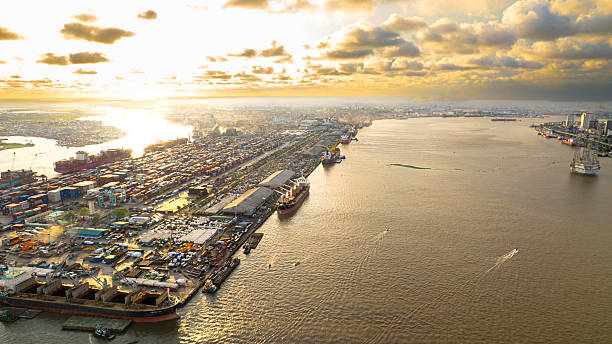
Lagos port congestion remains one of the biggest logistics challenges in Nigeria’s import system in 2026. The situation affects both Apapa Port and Tin Can Island Port, which together handle more than half of the country’s international cargo movement and serve as the main gateway for imports into West Africa’s largest economy.
In practical terms, the congestion is not a one-time event—it is a structural, recurring pressure cycle driven by high cargo volume, limited evacuation capacity, and road infrastructure constraints.
Current congestion situation in Lagos ports
1. Vessel waiting times still present but uneven
Recent global port monitoring shows:
- Apapa experiencing average vessel waiting times of around 3+ days in some cycles
- Tin Can showing lower but still active congestion patterns depending on yard load
This means ships are still being delayed, but not at the same intensity every day.
2. High yard congestion despite clearance activity
Even when cargo is discharged:
- containers remain in terminals for longer periods
- yard space becomes saturated during peak import windows
- evacuation speed does not match discharge speed
This creates a backlog effect inside the port system.
3. Road access congestion remains a major bottleneck
One of the most consistent issues is outside the port gates:
- Apapa–Oshodi expressway slowdowns
- truck queues stretching toward Mile 2 axis
- overlapping commercial and port-bound traffic
This is still one of the biggest reasons for delayed cargo evacuation.
4. Truck scheduling and call-up system pressure
Even with electronic call-up systems:
- scheduling gaps still occur
- truck availability fluctuates
- entry timing mismatches create queues
So cargo movement becomes dependent on both system control and real-time compliance.
Main causes of Lagos port congestion
1. Cargo concentration in Lagos
Lagos remains Nigeria’s dominant import hub:
- Apapa and Tin Can handle the bulk of container traffic
- vessels continue to prefer Lagos routes due to established trade networks
- inland distribution still depends heavily on Lagos corridors
This concentration keeps pressure constant.
2. Infrastructure limitations vs trade volume
While improvements exist, demand still exceeds capacity:
- limited road evacuation routes
- constrained terminal yard space
- high truck dependency for inland movement
3. Operational coordination challenges
Congestion is not only physical:
- customs processing delays
- documentation checks
- overlapping regulatory procedures
These slow down cargo release even after arrival.
4. Truck logistics imbalance
A large part of delay comes from trucking:
- insufficient coordinated truck scheduling
- idle trucks waiting for clearance windows
- high competition for available haulage
What the data is showing in 2026
Across multiple monitoring sources, Lagos ports are showing:
- moderate vessel waiting times (1–4 days depending on cycle)
- high yard utilization levels during peak weeks
- persistent inland evacuation delays
Globally, Lagos is still classified among ports experiencing recurring congestion pressure rather than full disruption.
Economic impact of Lagos port congestion
1. Higher landed import costs
Delays increase:
- demurrage charges
- storage fees
- trucking costs
2. Inflation transmission into the economy
Since Lagos handles most imports:
- delays increase product cost
- retail prices adjust upward
- supply chain pricing becomes unstable
3. Business planning uncertainty
Importers face:
- unpredictable delivery timelines
- inventory planning difficulties
- fluctuating logistics costs
4. Trade efficiency loss
Reports consistently link port congestion to:
- reduced import efficiency
- higher operational costs
- slower cargo turnover
What is being done to reduce congestion
1. Port modernization programs
Ongoing efforts include:
- infrastructure upgrades
- improved terminal equipment
- digital clearance systems
2. Truck call-up enforcement improvements
Authorities continue to refine:
- scheduling systems
- staging areas
- access control mechanisms
3. Shift toward alternative ports
Lekki Deep Sea Port is gradually:
- reducing pressure on Lagos ports
- handling larger vessels
- improving cargo distribution options
Where Travo.ng fits in real logistics operations
Port congestion doesn’t stop at cargo—it affects movement across the system
Even after clearance, Lagos port congestion impacts:
- movement of clearing agents and import managers
- airport pickup for international suppliers
- hotel arrangements for business visitors
- urgent transport between port, warehouse, and offices
- time-sensitive logistics coordination during cargo release
How Travo.ng supports logistics flow
Travo.ng helps businesses operate within Lagos port congestion conditions by coordinating:
- airport pickup and executive transport services
- logistics movement between Apapa, Tin Can, and warehouses
- hotel booking for international partners and shipping agents
- structured transport scheduling for import operations
- time-sensitive mobility planning during clearance windows
While Lagos ports face structural congestion, Travo.ng focuses on keeping people, coordination, and operational movement efficient across the supply chain.
